LiDAR, Flir Thermal, Infrared Drone Specialists
Businesses today need more than attractive visuals. They need imagery and data that help them make decisions, communicate clearly, document conditions, and support both operations and marketing. That is why LiDAR and thermal FLIR infrared drone services have become increasingly valuable for companies, property managers, engineers, contractors, developers, facility teams, and organizations that need more than standard aerial photography.
At St Louis Photography Studio, we understand that advanced drone imaging is not just about flying equipment over a site. It is about choosing the right capture method, planning the project correctly, working safely, and delivering usable results that serve a clear purpose. For some clients, that purpose is inspection support. For others, it is mapping, documentation, condition awareness, visual communication, or marketing content. In many cases, it is a combination of all of the above.
As experienced videographers, photographers, and producers, we know that successful drone services require both technical capability and production experience. LiDAR and thermal infrared drone work are specialized services, and when used correctly, they can give businesses in the St. Louis area a much more complete understanding of buildings, land, infrastructure, equipment, and large commercial properties.
What makes LiDAR drone services so valuable?
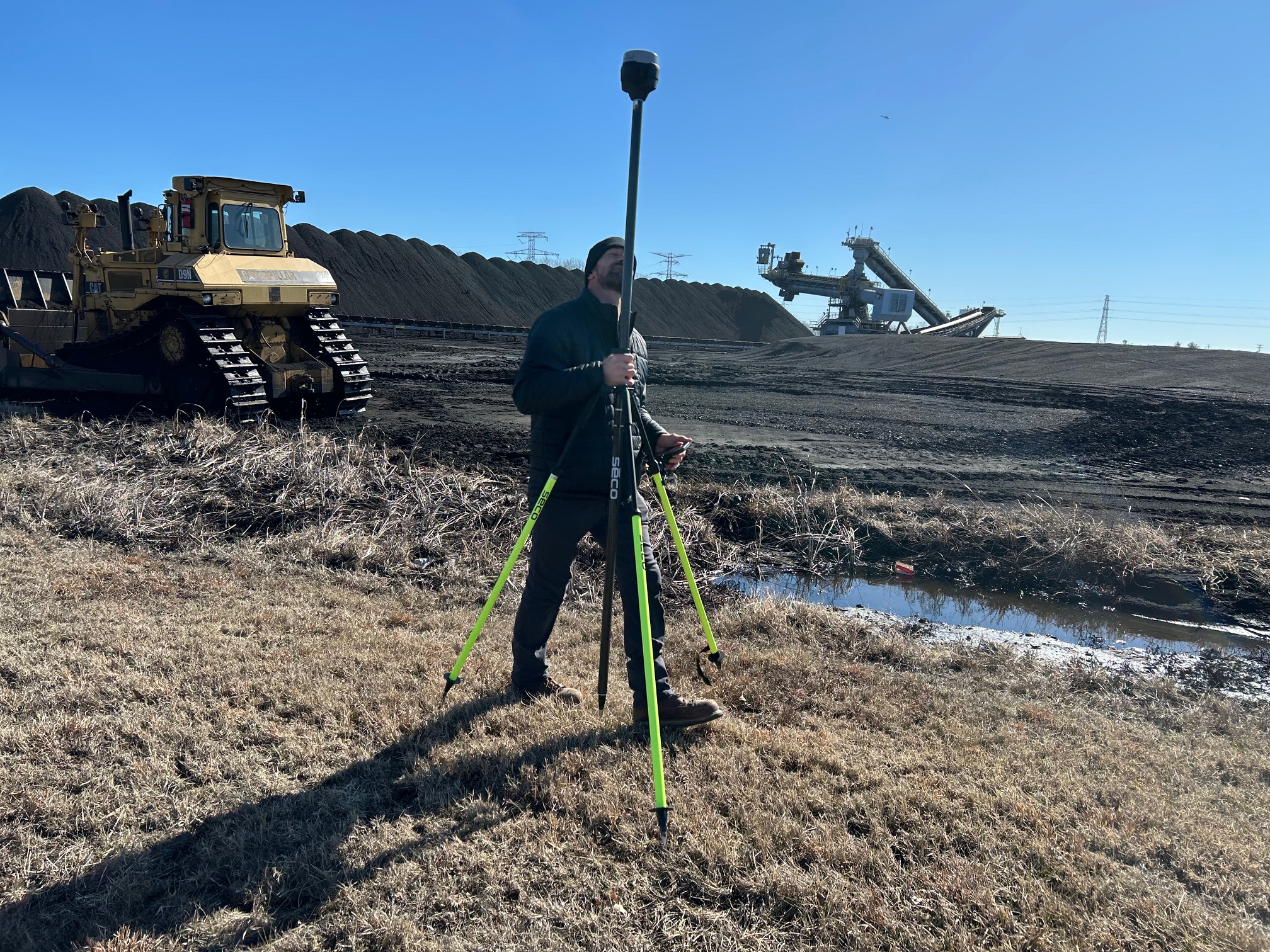
LiDAR, or Light Detection and Ranging, uses laser pulses to measure distance and create highly detailed three-dimensional information about a site or structure. Unlike conventional photography alone, LiDAR is designed to help capture measurable spatial data, making it especially useful when accuracy, topography, volume, layout, or terrain understanding matters.
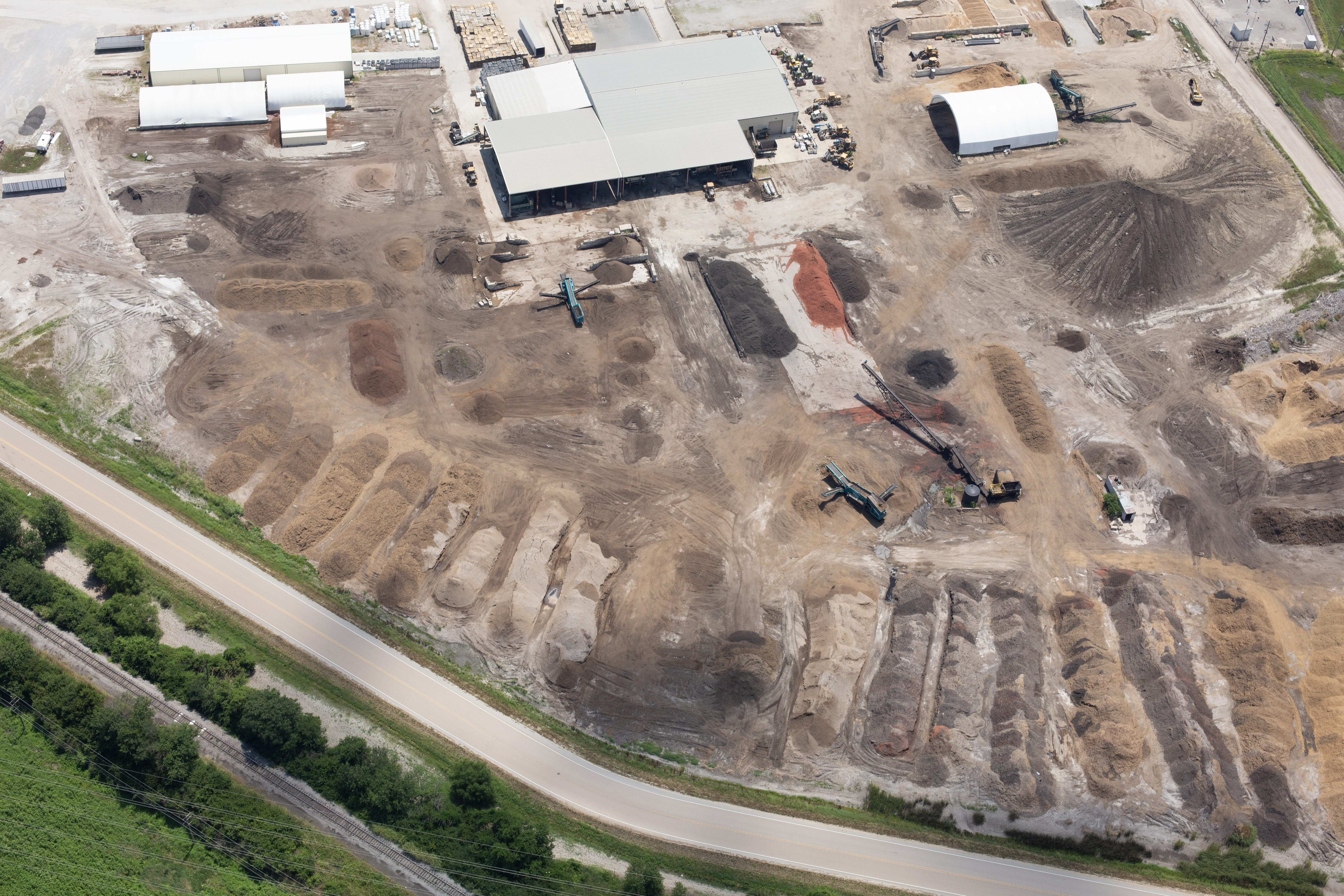
For many businesses and organizations, LiDAR drone services can be useful for documenting large and complex environments more thoroughly than traditional visual capture methods. This can include construction sites, industrial properties, business campuses, development tracts, infrastructure corridors, quarries, logistics facilities, and other large-scale outdoor environments where visual understanding and spatial awareness are essential.
LiDAR is especially useful when decision makers need more than a simple photograph. A traditional image may show what something looks like. LiDAR can help reveal the shape, contours, elevation changes, and overall spatial structure of a property or site. That makes it valuable for planning, reporting, documentation, site analysis, and presentations that need to communicate physical conditions clearly.
What thermal FLIR infrared drone imaging adds
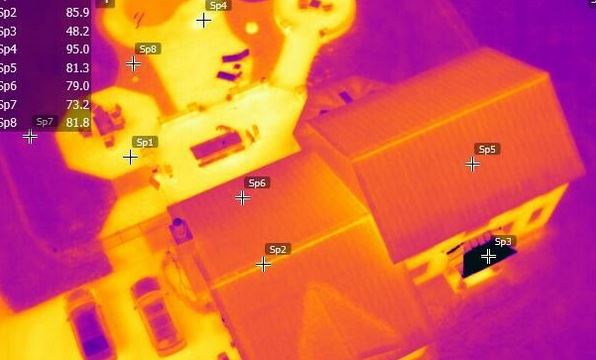
Thermal FLIR infrared drone imaging serves a different purpose, but it is equally valuable in the right scenario. Rather than capturing only visible light, thermal imaging detects heat patterns and temperature differences. That makes it useful for identifying anomalies, inconsistencies, or areas of concern that may not be visible with standard photography or video.
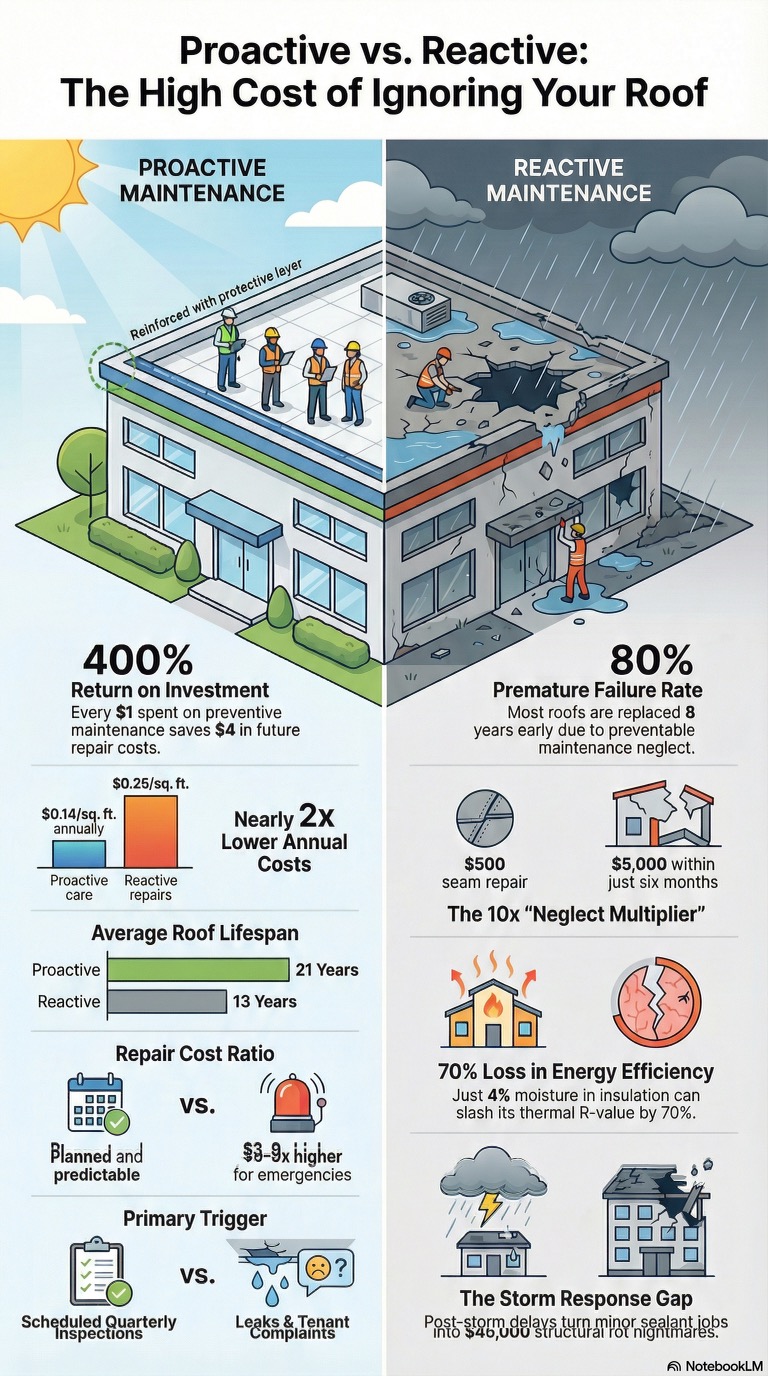
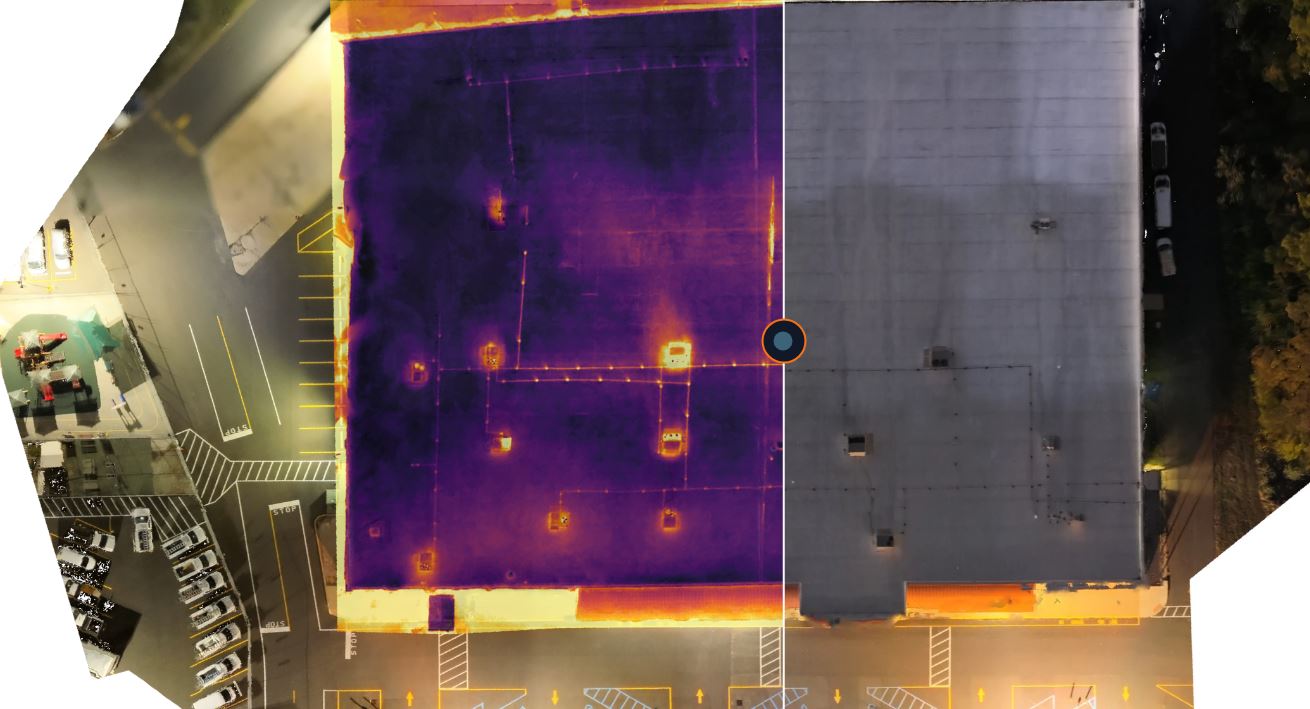
For commercial and industrial applications, thermal drone services can support visual assessments of roofs, building envelopes, equipment, mechanical systems, solar installations, and large facility exteriors. In many cases, thermal imaging helps clients identify where conditions appear irregular, allowing them to prioritize further evaluation by the appropriate licensed experts or service professionals.
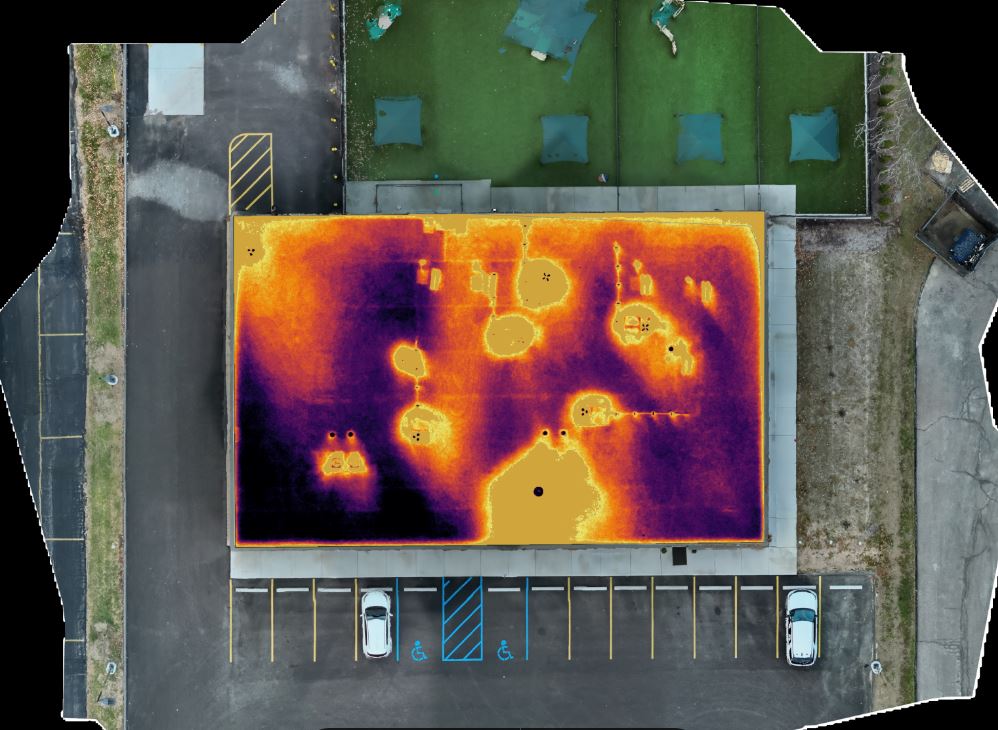
This is one of the reasons thermal drone imaging has become so useful. It can help organizations quickly review large areas that would otherwise be difficult, time-consuming, or costly to assess from the ground. It can also provide compelling visual documentation that supports maintenance planning, project records, facility management discussions, insurance communication, and broader operational awareness.
Why St. Louis organizations are looking beyond standard drone photography
Standard drone photography and video still play an important role in marketing, branding, and visual documentation. But many organizations now need more than cinematic aerial footage or overhead still photography. They want imaging that provides deeper insight.
Construction and development teams want a better way to document sites and track progress. Facility managers want more visibility into large roofs or building systems. Industrial operators want more efficient methods for reviewing large properties or equipment zones. Marketing teams want visual assets that help communicate innovation, scale, and technical sophistication. Agencies want stronger content for their clients. In all of these cases, LiDAR and thermal drone imaging can play an important role.
For businesses in the St. Louis area, these services are especially useful because many local projects involve large campuses, manufacturing environments, warehouses, distribution properties, schools, hospitals, commercial buildings, infrastructure, and active construction sites. These are precisely the kinds of environments where advanced drone imaging can provide real value.
LiDAR and thermal are not interchangeable services
It is important to understand that LiDAR and thermal imaging solve different problems.
LiDAR is primarily about spatial data, measurement, surface modeling, and understanding physical environments in three dimensions.
Thermal FLIR infrared imaging is primarily about heat patterns, surface temperature variations, and identifying visual clues that may indicate hidden issues or operational differences.
Some projects may require one or the other. Some may benefit from both. The correct choice depends on the goals of the assignment, the type of property or structure, the intended deliverables, the environmental conditions, and the information the client needs.
That is why experienced project planning matters. Businesses are best served when the production team understands not only the technology itself, but also the client’s broader objectives. A drone service should not be chosen because it sounds advanced. It should be chosen because it is the right tool for the job.
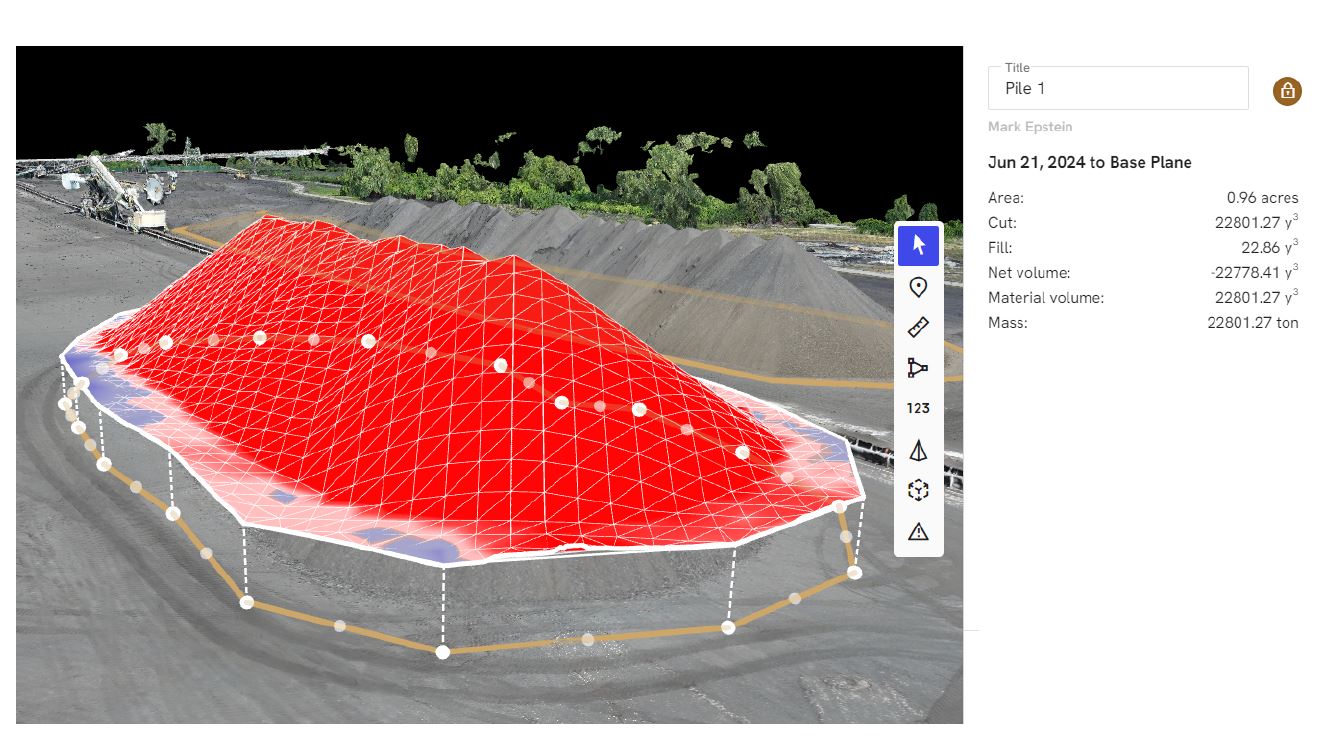
Common uses for LiDAR drone services
LiDAR can be a strong solution for a variety of commercial and organizational needs.
Construction teams can use LiDAR-based capture to better document site conditions, grade, and project environments.
Developers and planners may benefit from clearer topographic understanding and more complete spatial records.
Industrial and logistics operations can use LiDAR to document large facilities, yard layouts, access routes, and site relationships.
Aggregate yards, stockpile environments, and similar sites may benefit from LiDAR-based visual and spatial analysis where volumetric understanding is important.
Institutional campuses such as schools, hospitals, and large corporate properties can benefit from accurate site visualization when planning renovations, additions, improvements, or general property documentation.
In each of these situations, the value of LiDAR lies in its ability to go beyond ordinary imagery and provide a richer understanding of the space itself.
Common uses for thermal FLIR infrared drone imaging
Thermal imaging is especially useful when clients need a faster and broader way to review surfaces, structures, or systems for visible temperature differences.
Commercial roof review is one of the most common use cases. Large roofs are difficult to evaluate from the ground, and thermal imaging can help reveal patterns that may support closer investigation.
Building envelope observation is another strong application. Thermal imagery can help highlight conditions related to heat loss, insulation inconsistencies, or exterior performance patterns under the right circumstances.
Solar panel inspection can also benefit from thermal drone imaging, as irregular temperature signatures may help indicate panels or areas that deserve additional review.
Industrial and mechanical environments may use thermal imaging to identify hotspots, unusual performance zones, or potential maintenance concerns that would not be visible in standard photography.
Facility management teams may also use thermal drone services to support recordkeeping, maintenance planning, and communication with leadership, consultants, or outside service providers.
Why expertise matters in advanced drone imaging
Not all drone assignments are equal. A pilot who can capture attractive aerial footage may not necessarily be the right choice for LiDAR or thermal work. These services require greater attention to workflow, mission planning, environmental conditions, safety, deliverables, and post-processing.
Thermal work, for example, can be affected by surface materials, weather, sunlight, time of day, building conditions, and operating states of equipment. A successful thermal imaging mission depends on knowing when and how to capture the material so that the results are meaningful.
LiDAR projects also require more than basic flying ability. Flight design, site conditions, output requirements, data density needs, and processing considerations all influence the final usefulness of the captured material.
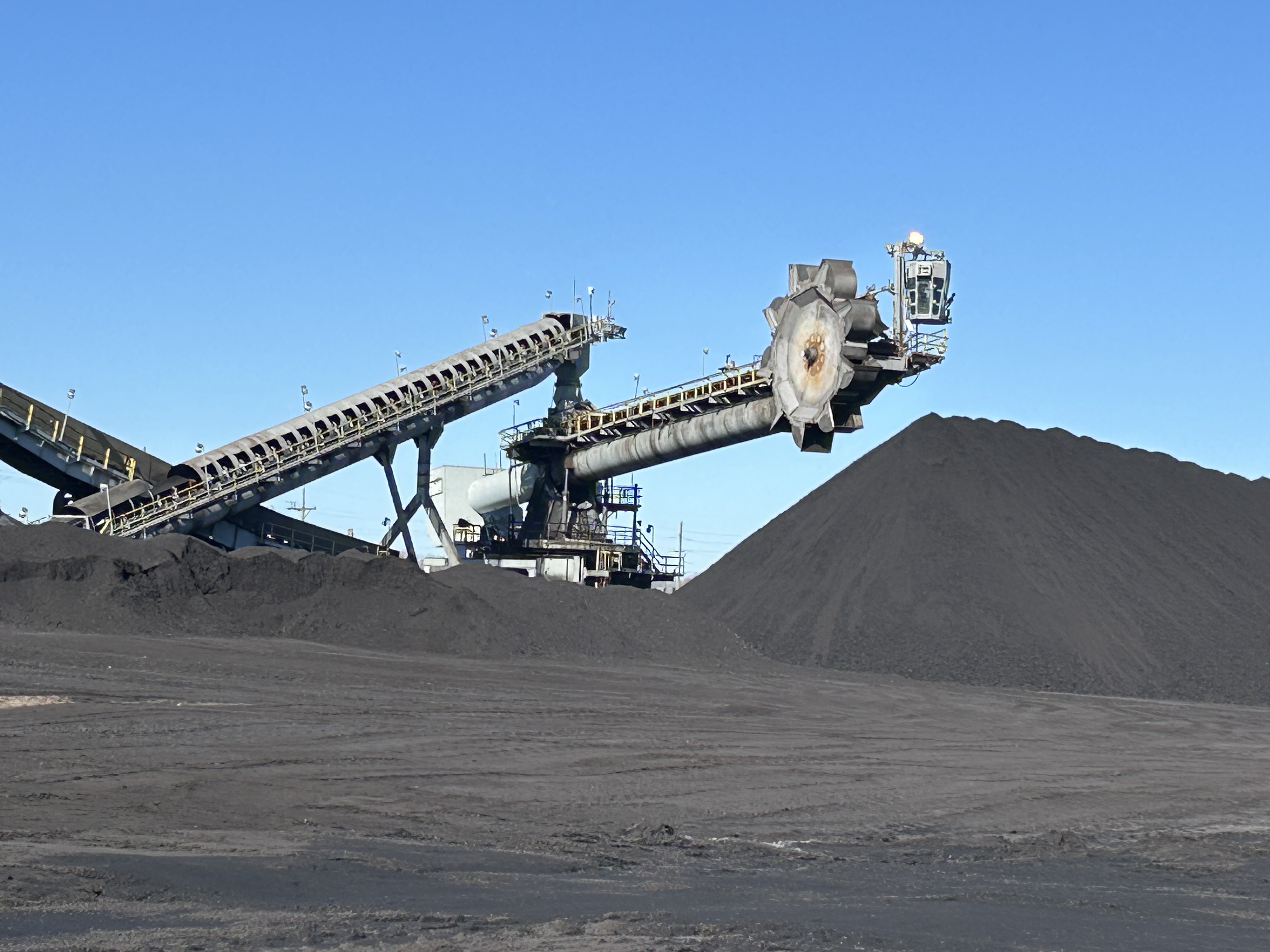
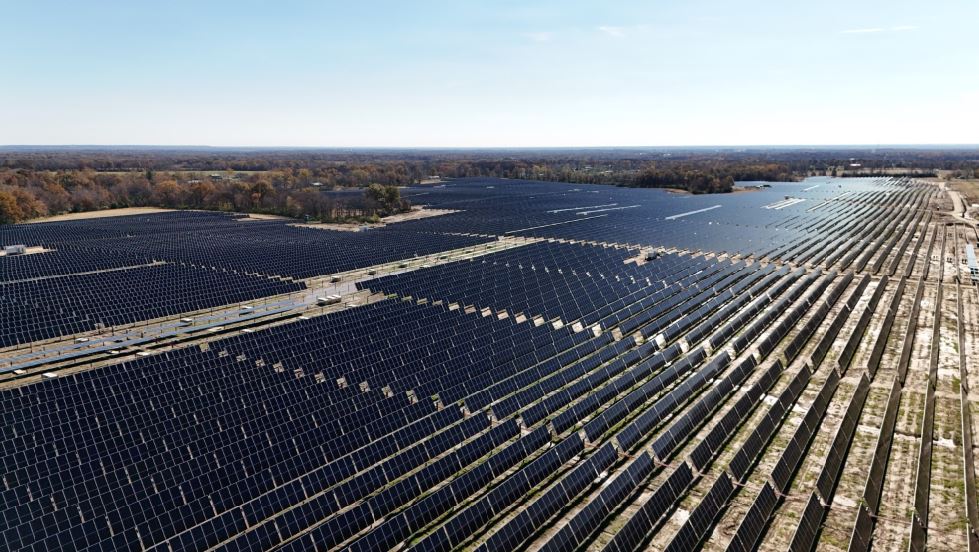
This is why experienced production planning is so important. A strong provider should understand both imaging and execution. The goal is not just to collect images or data, but to collect the right material in the right way so it becomes useful to the client.
The marketing and communication value of LiDAR and thermal imaging
One of the most overlooked benefits of advanced drone services is their value in communication and branding.
Many organizations first consider LiDAR or thermal imaging because of practical or technical needs. But once captured, those visuals can also become powerful content for presentations, websites, proposals, case studies, stakeholder reports, and broader marketing efforts.
A company that uses advanced drone imaging demonstrates capability, innovation, professionalism, and attention to detail. Thermal imagery and LiDAR visualizations can help make technical services more understandable to non-technical audiences. That makes them especially useful for engineering firms, contractors, commercial service providers, developers, industrial companies, and organizations that want to communicate expertise visually.
This is where a full-service photography and video production company adds even more value. Rather than simply handing over raw files, a production-oriented team can help shape captured material into assets that serve both practical and promotional goals.
Planning and production are just as important as the equipment
Technology matters, but production experience matters just as much.
Every successful LiDAR or thermal drone assignment depends on proper planning. That includes understanding the client’s goals, choosing the right flight strategy, coordinating access, addressing safety requirements, timing the shoot correctly, capturing the right coverage, and preparing final deliverables that work within the client’s broader workflow.
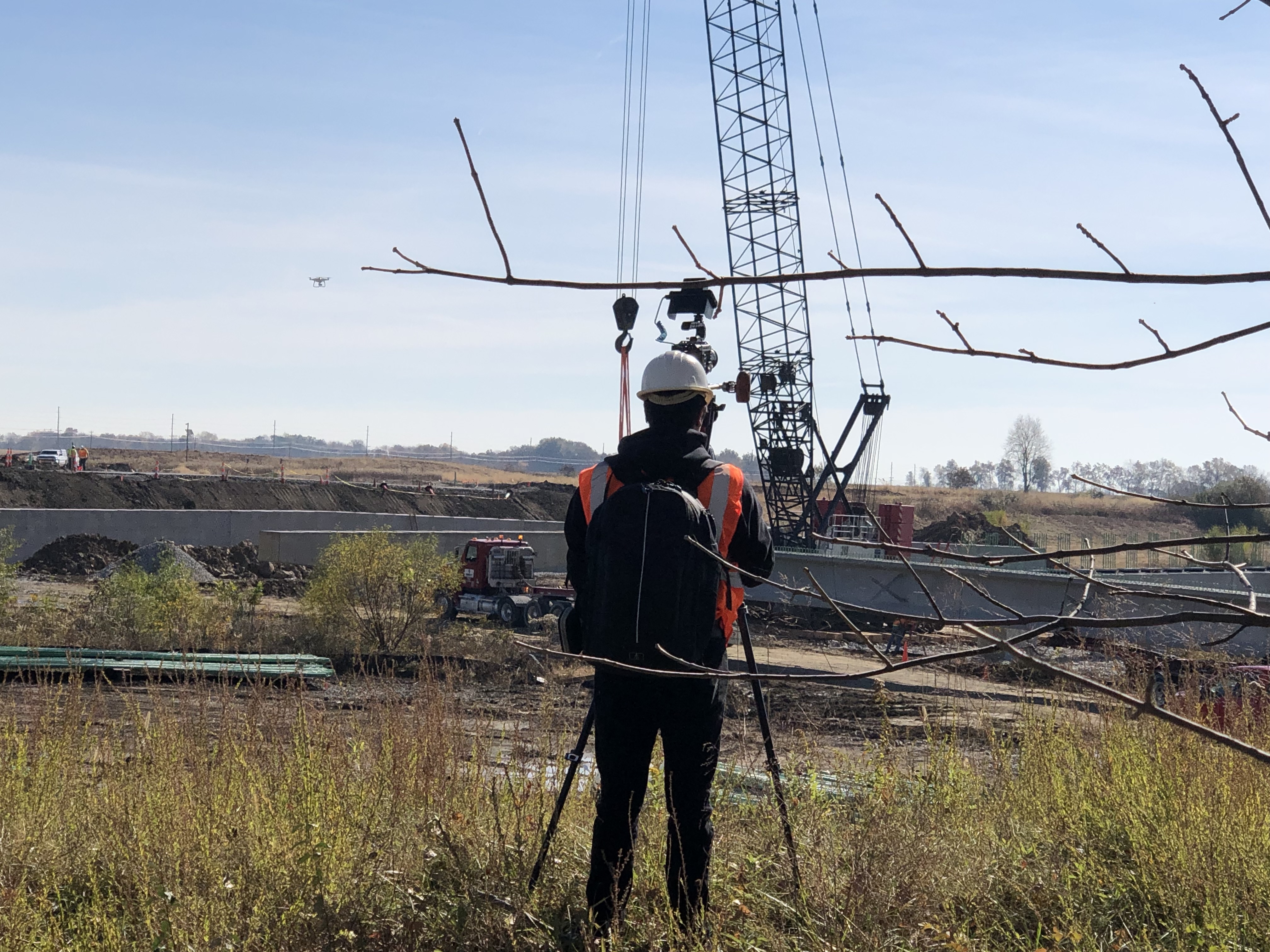
For commercial projects, this often means managing active locations, working around operations, communicating with stakeholders, and making sure the assignment runs efficiently. In these environments, a drone service provider needs to think like a producer, not just a pilot.
That is one of the advantages of working with an experienced photography and video production team. We understand not only how to capture imagery, but how to manage projects, locations, schedules, people, equipment, and end-use deliverables in a professional commercial environment.
Choosing the right LiDAR and thermal drone specialists in St. Louis
When evaluating a provider for advanced drone imaging, businesses should ask a few important questions.
Does the team understand commercial production and location logistics?
Do they know how to work safely in active business, industrial, construction, or institutional environments?
Can they capture imagery that serves both practical needs and broader communication goals?
Can they integrate drone imaging with still photography, video production, editing, and post-production?
Can they deliver polished assets, not just technical files?
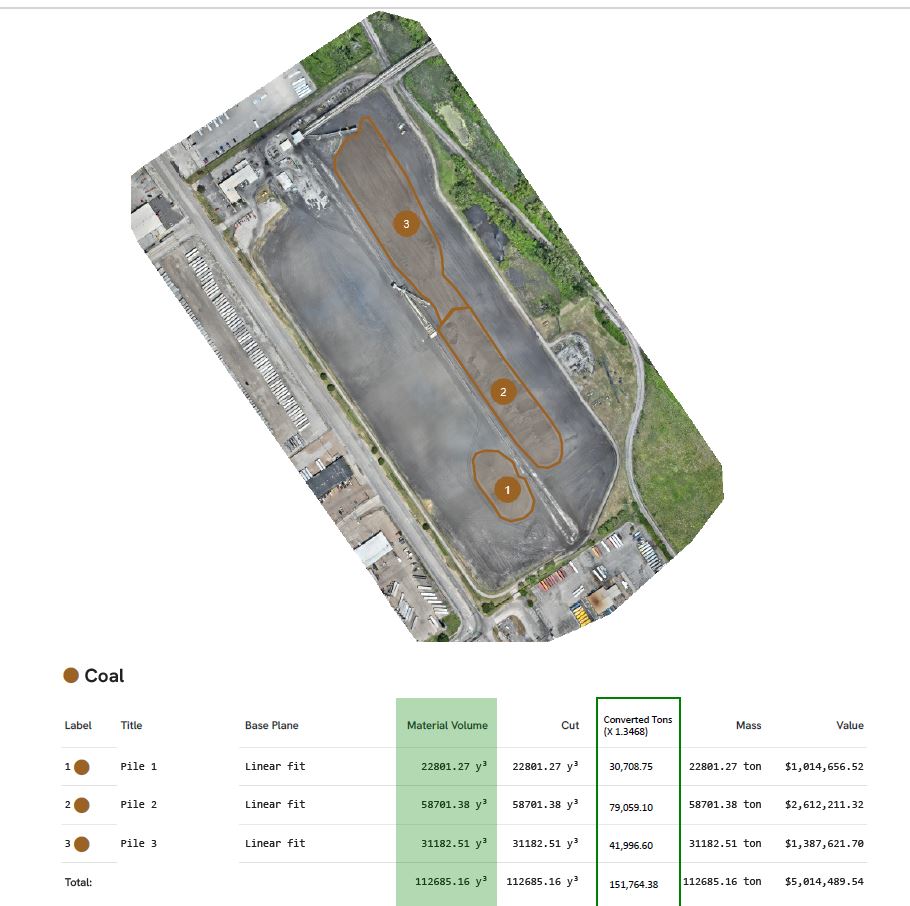
For many organizations, the best fit is a team that understands both the technical and creative sides of image acquisition. Advanced drone services are most valuable when they are part of a larger production strategy that supports the client’s operational, visual, and marketing needs all at once.
The future of commercial imaging is more informative
The future of photography and video production is not just about making things look good. It is about helping businesses see more, understand more, and communicate more effectively.
LiDAR and thermal FLIR infrared drone services reflect that shift. They provide a richer layer of insight than standard imagery alone. They help organizations assess conditions, document environments, support planning, and create stronger visual assets for communication and branding.
For some clients, the benefit is more efficient property review. For others, it is site documentation, condition awareness, maintenance support, or presentation value. In every case, the key is using the right technology with the right expertise behind it.
St Louis Photography Studio for LiDAR and Thermal FLIR Infrared Drone Services
At St Louis Photography Studio, we bring the perspective of an experienced commercial photography and video production team to every project. We understand how to align advanced drone imaging with real business goals, whether the assignment involves site documentation, facility visibility, technical imaging, marketing support, or a combination of all of these.
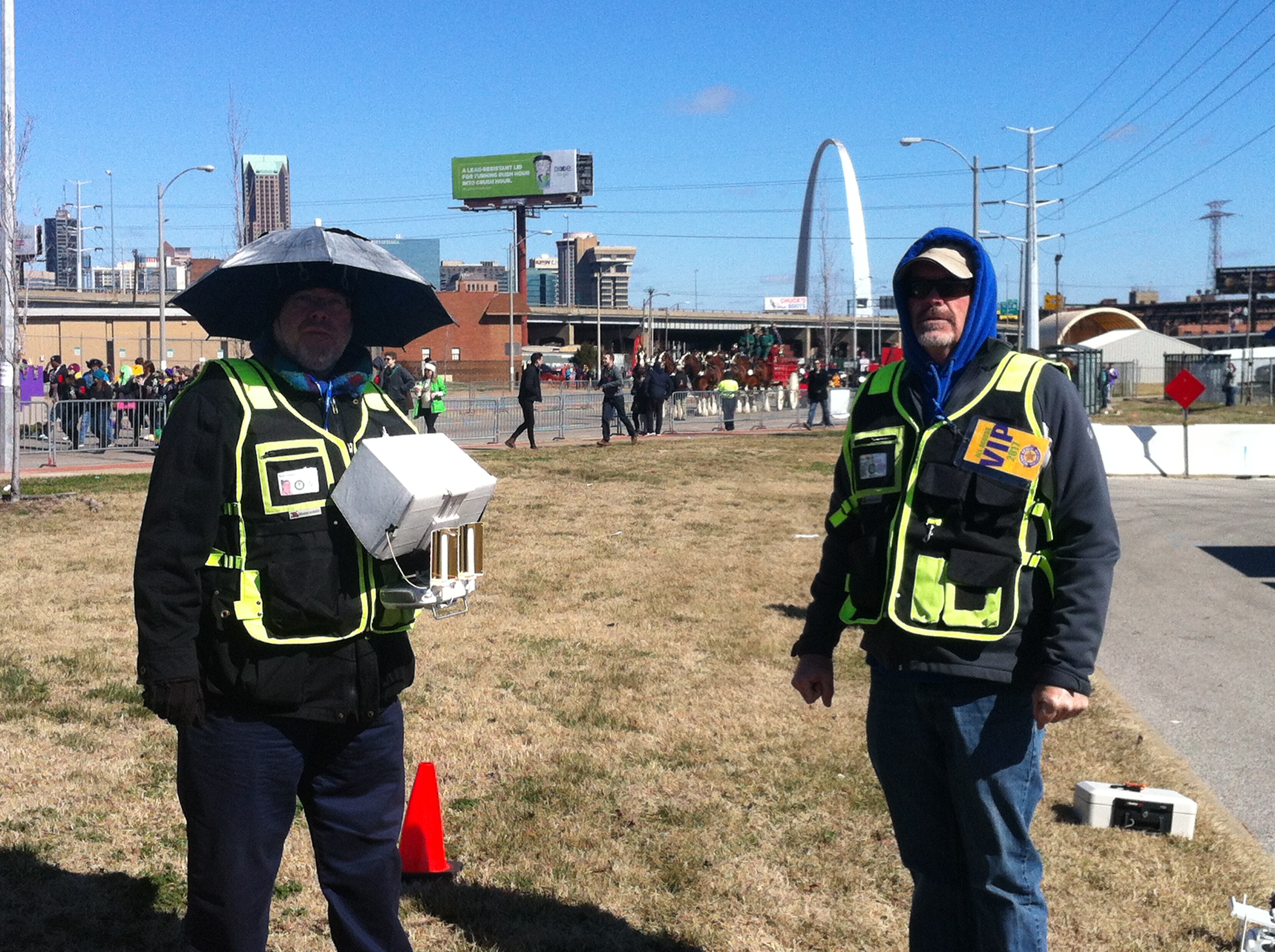
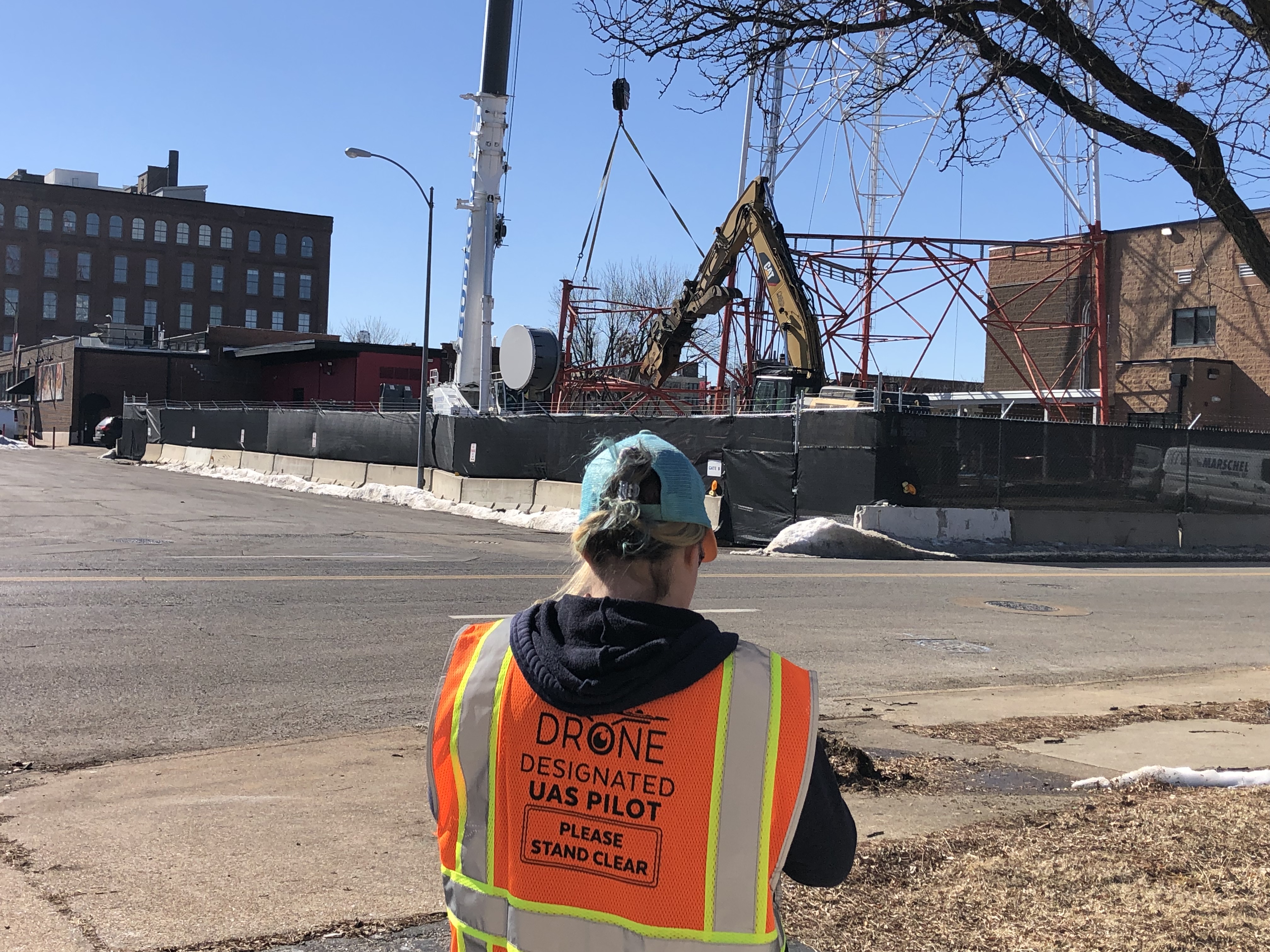
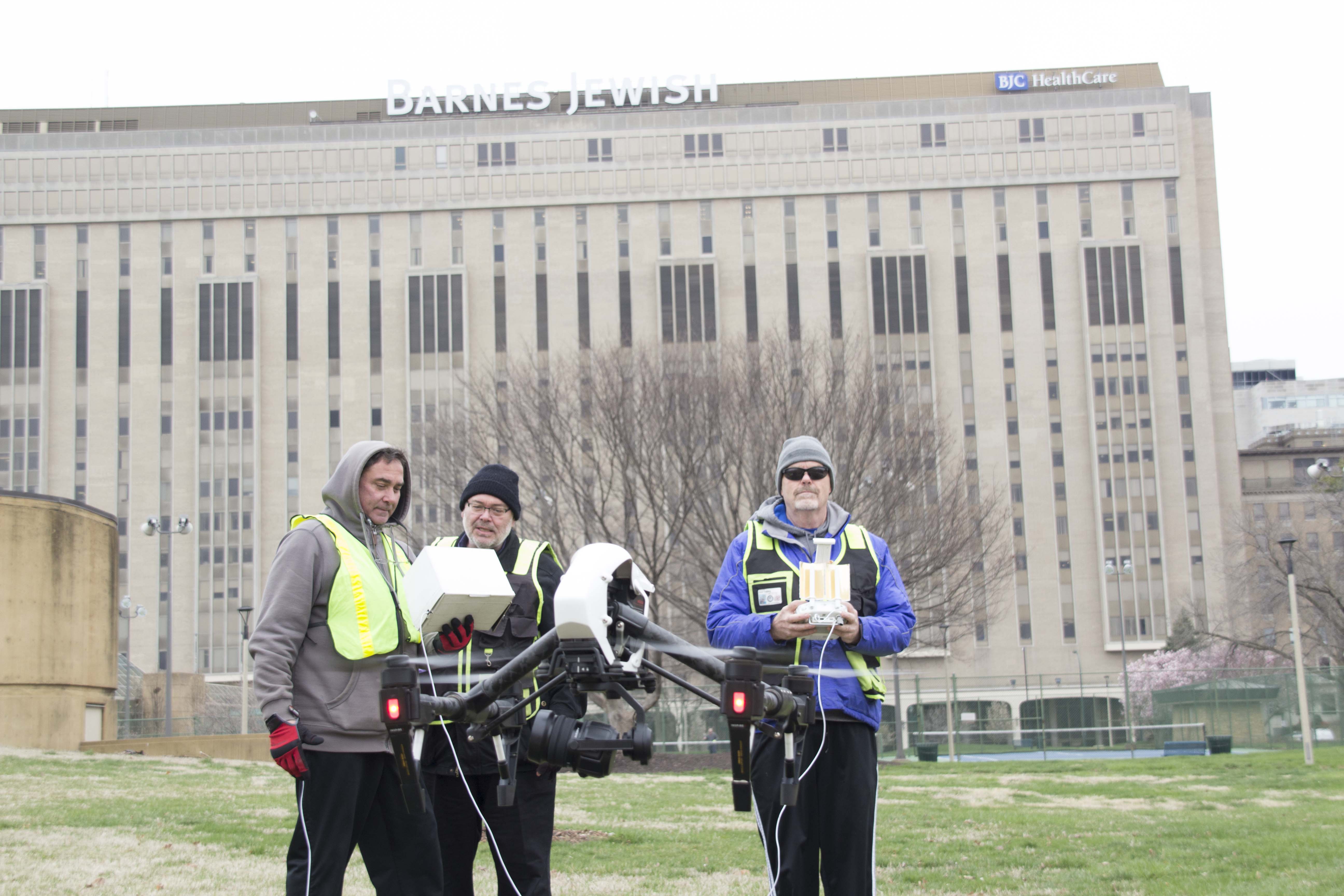
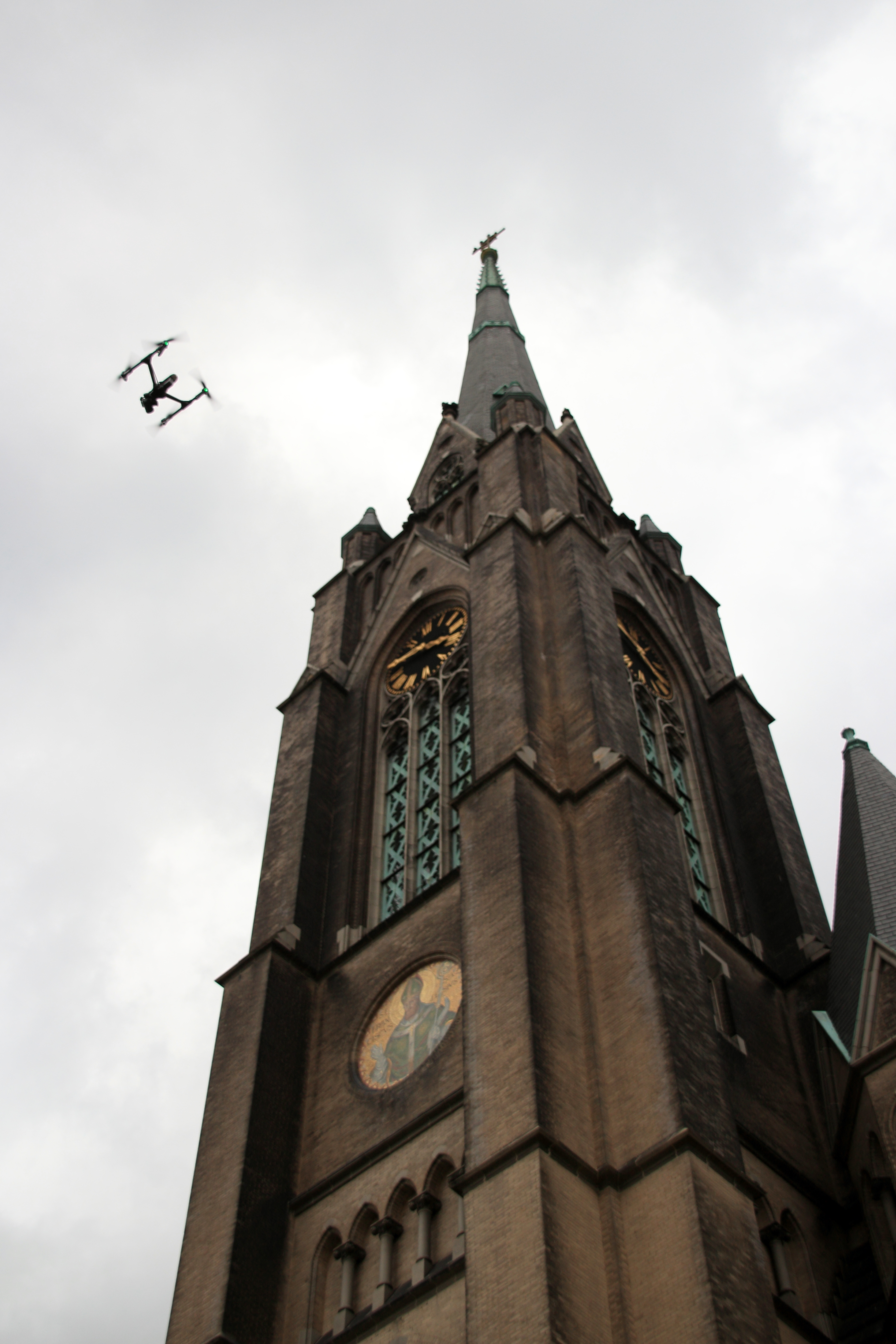
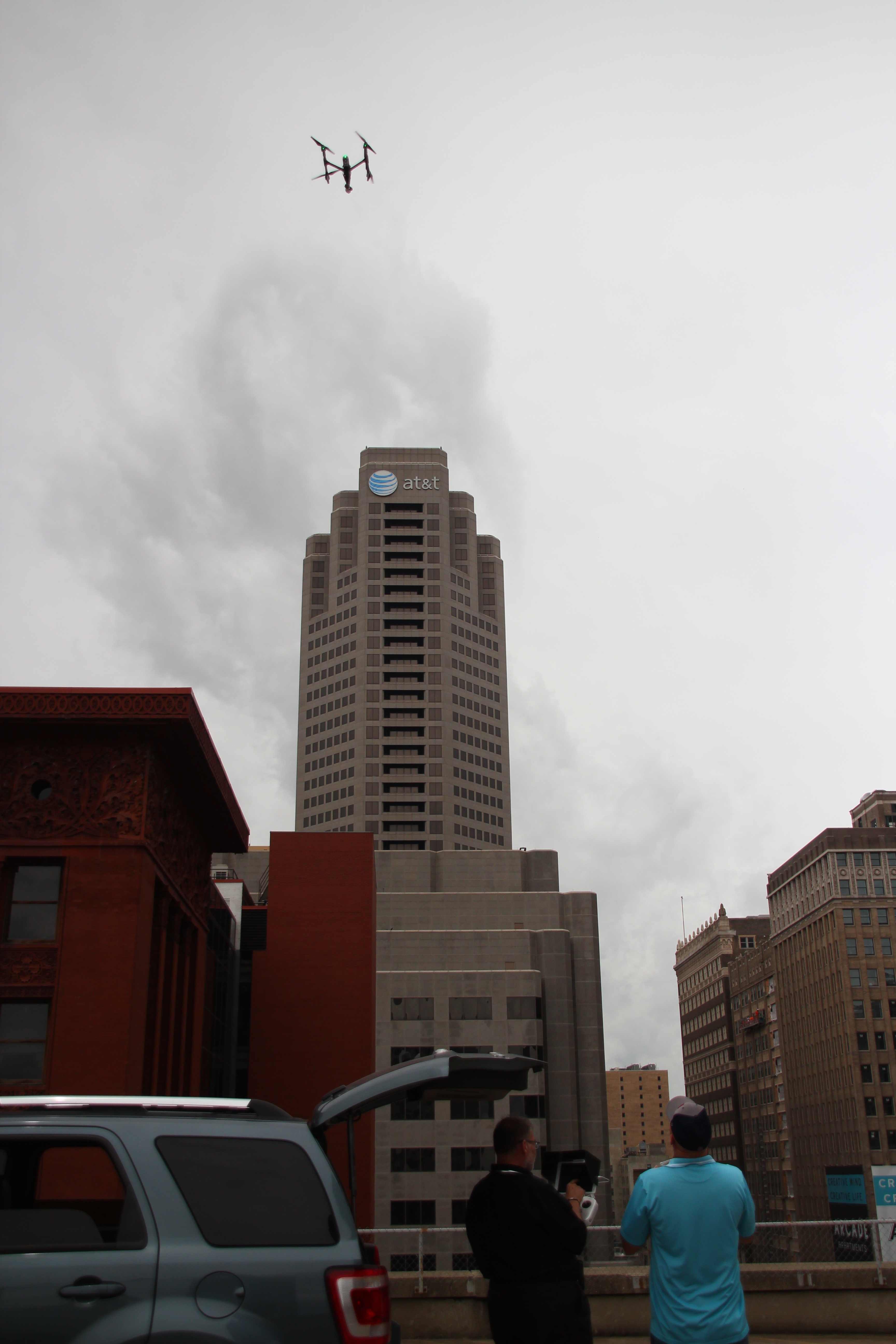
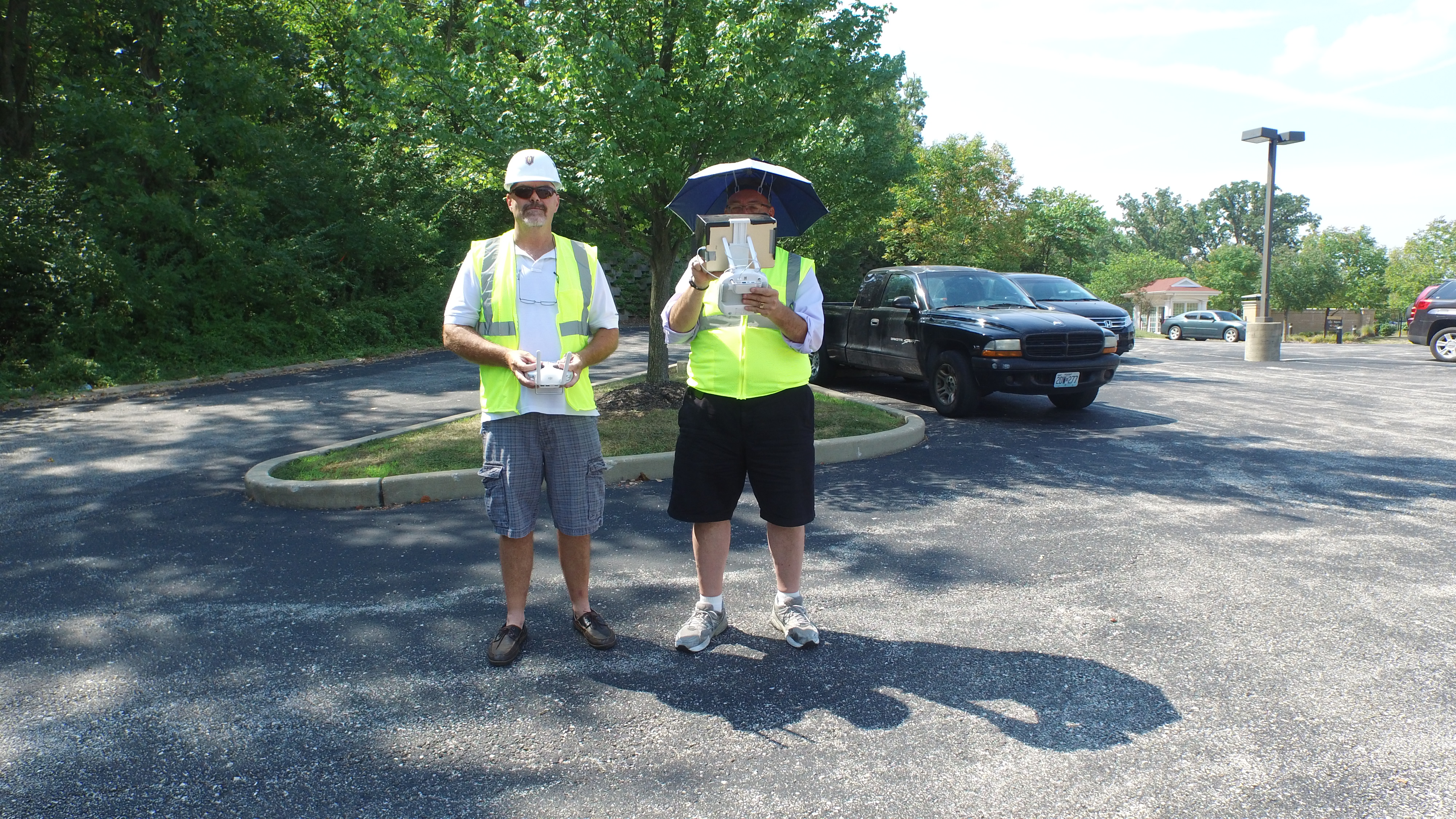
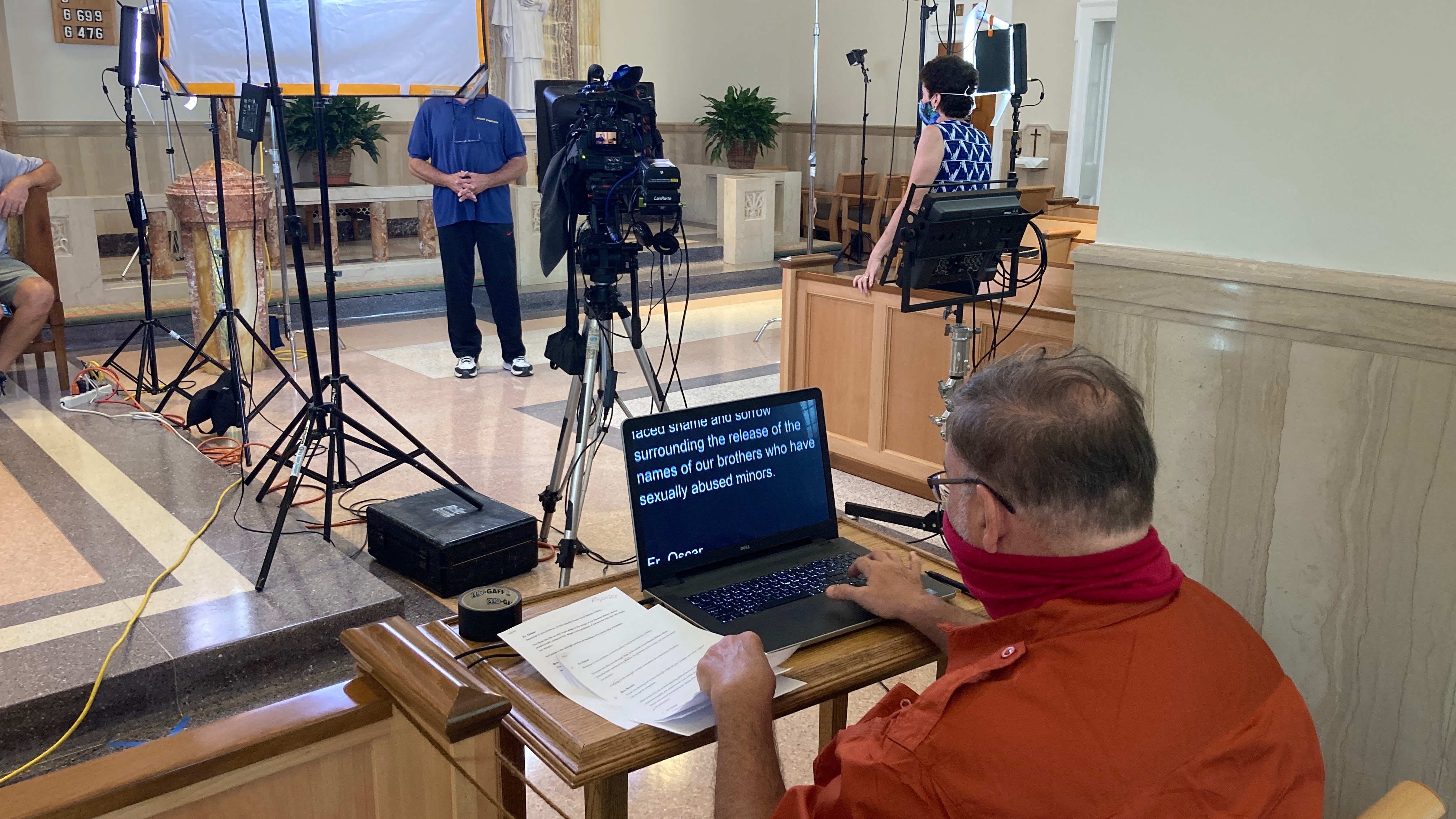
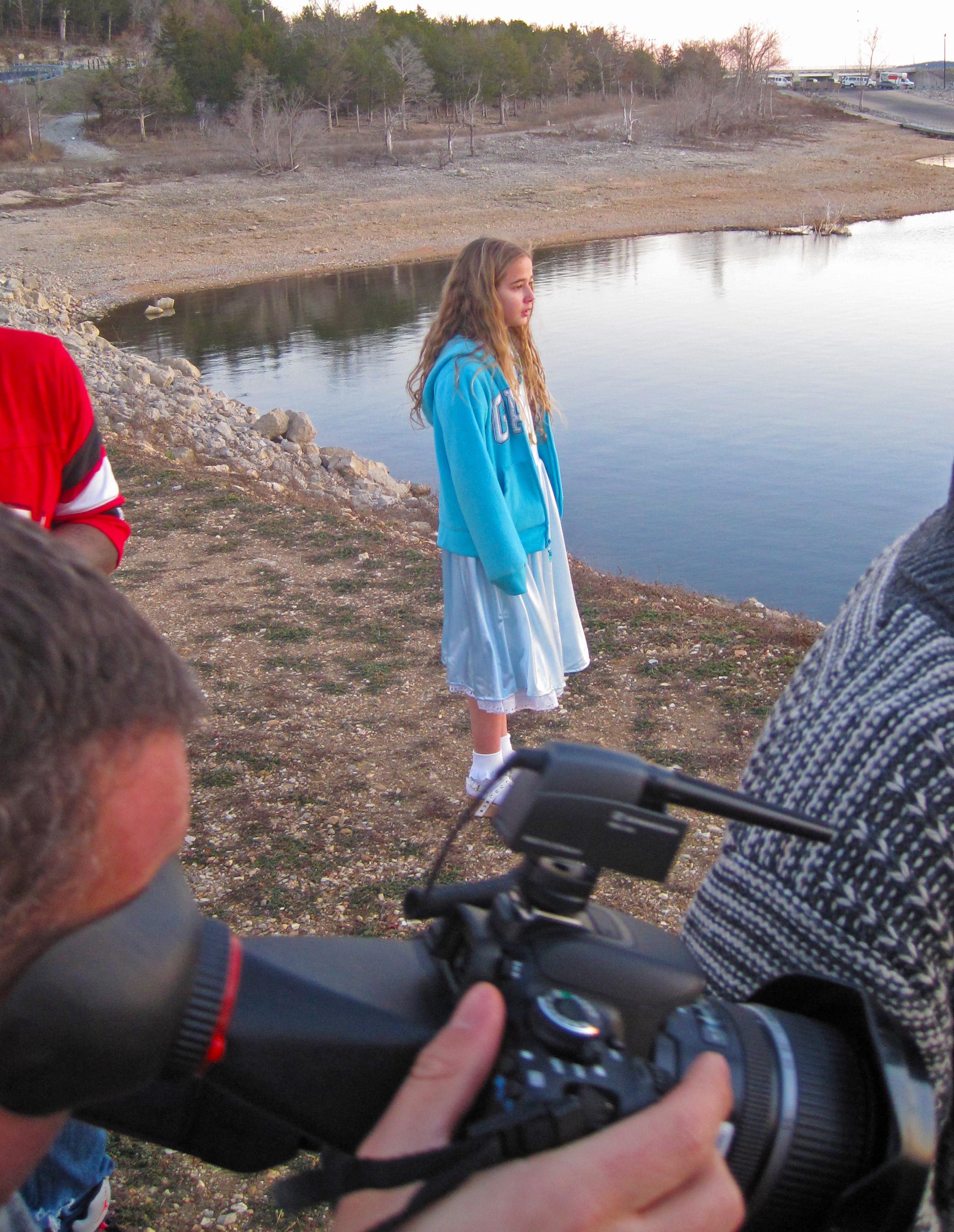
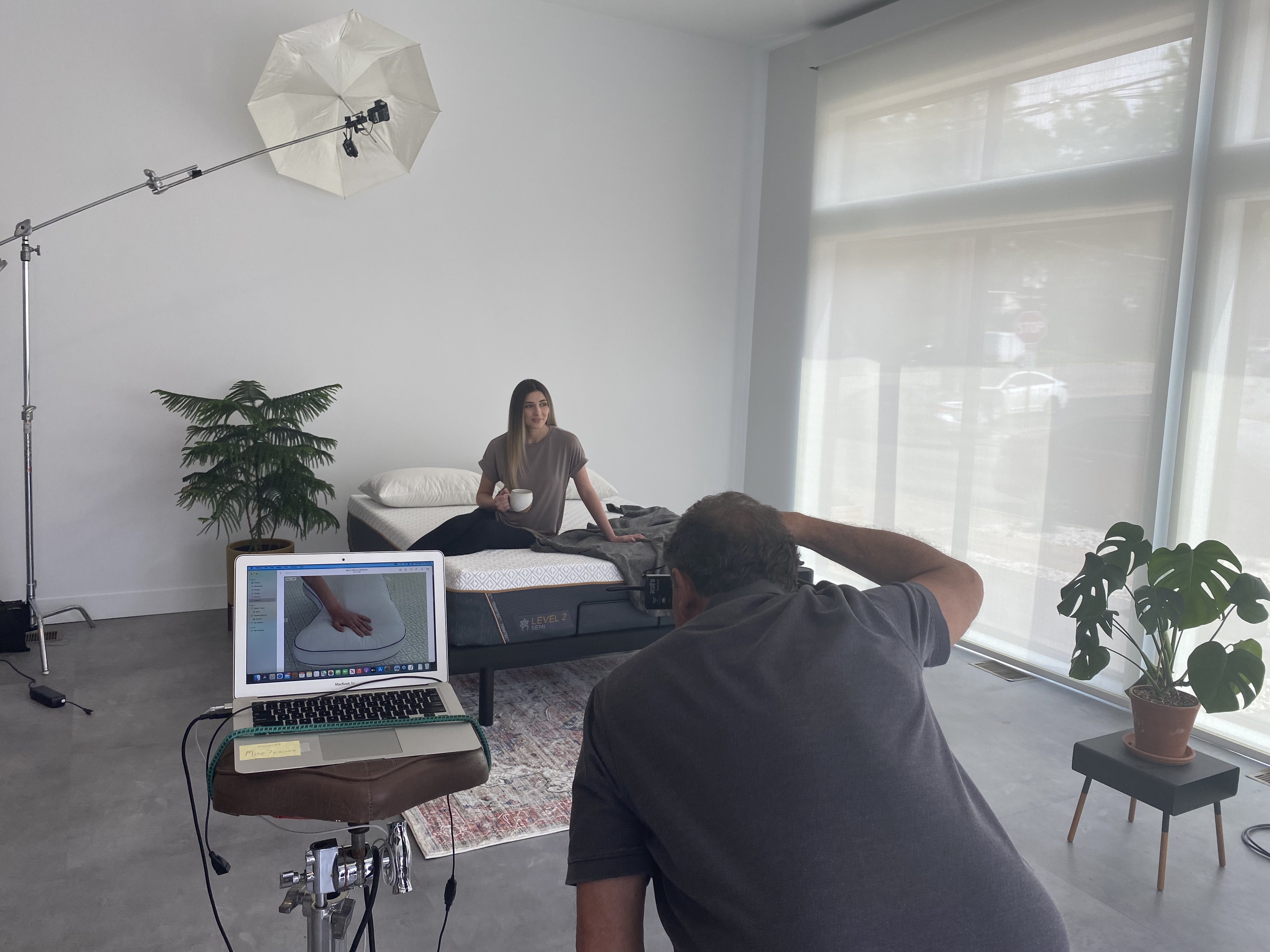
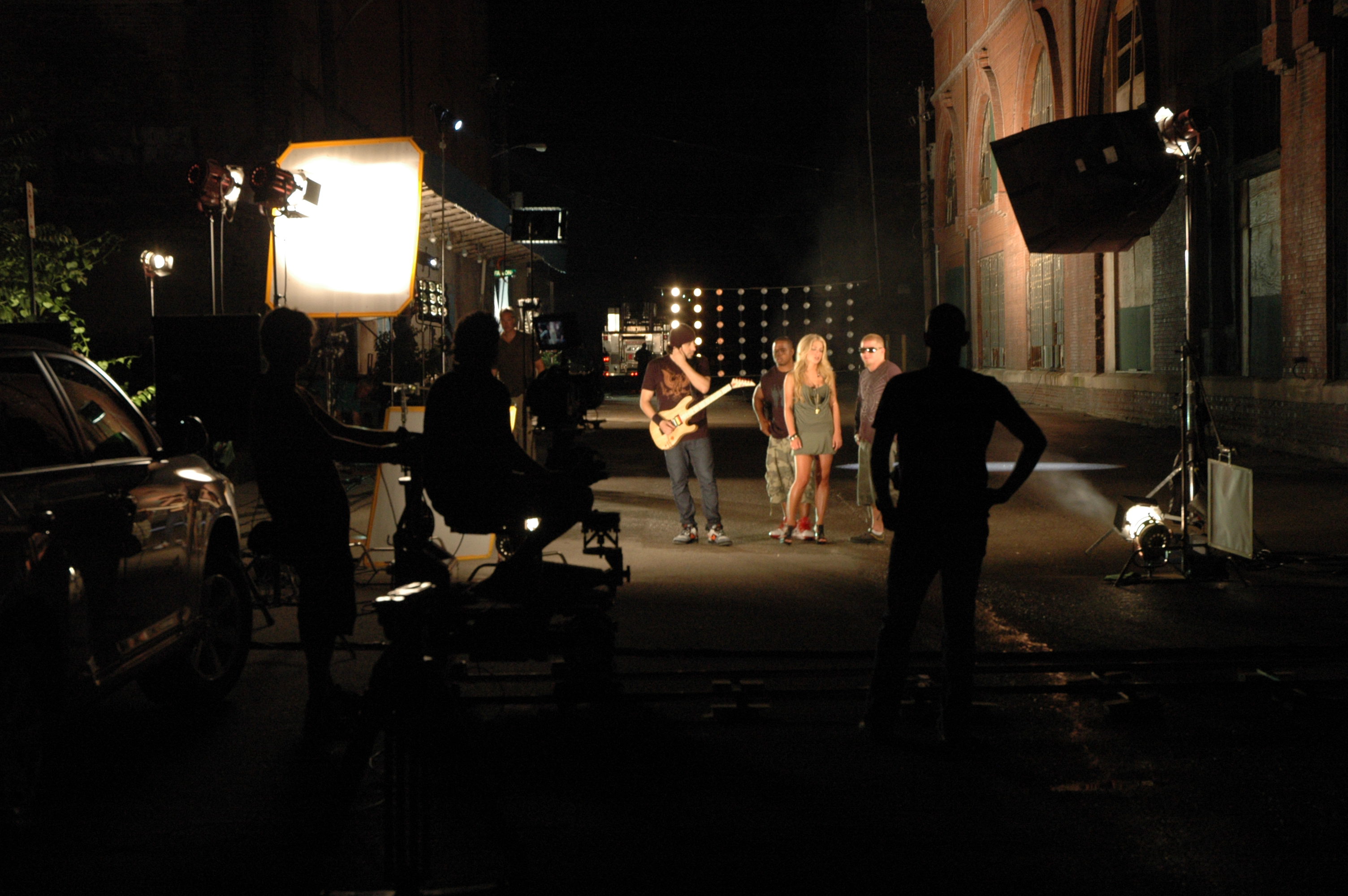
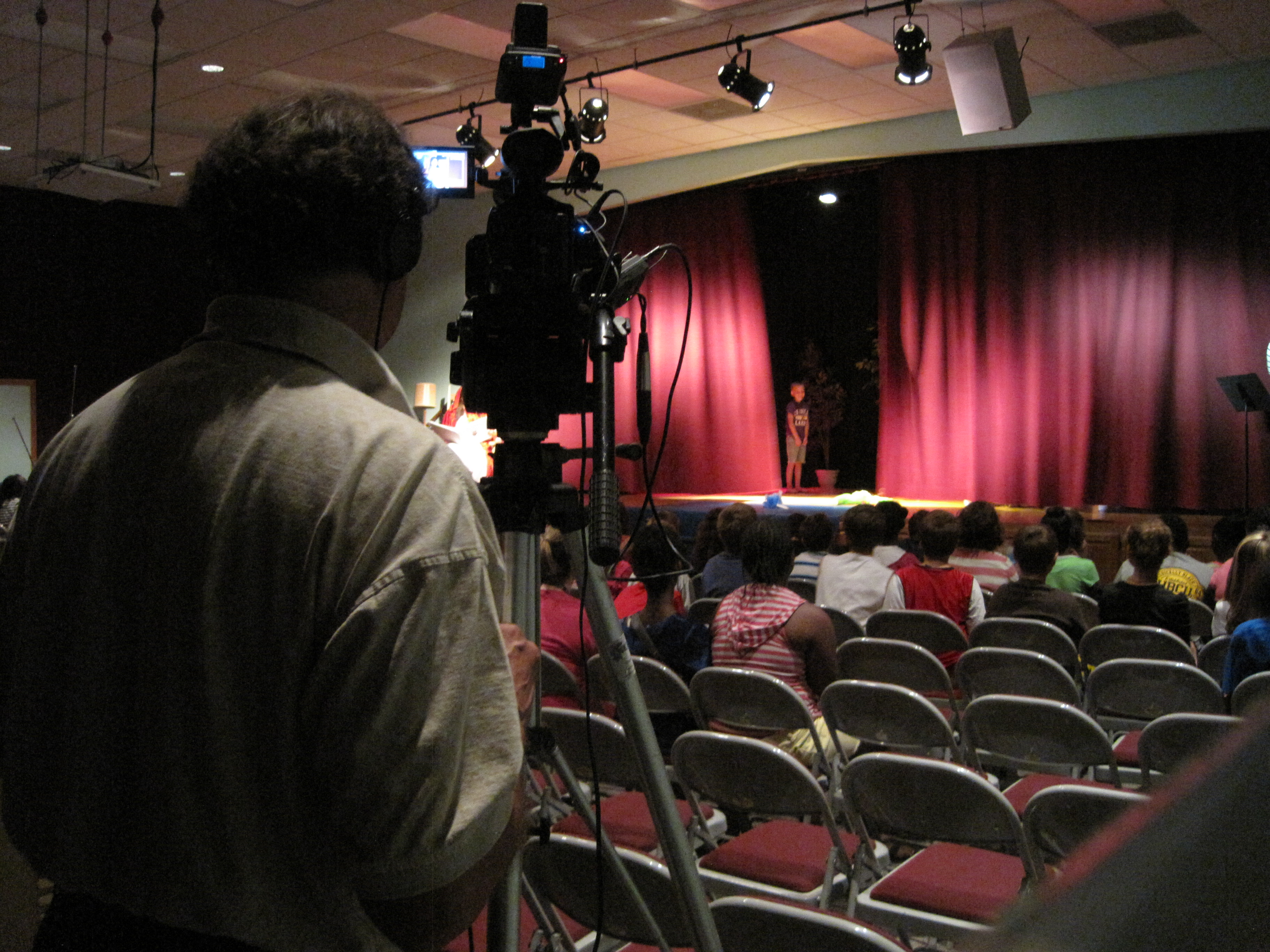
St Louis Photography Studio is a full-service professional commercial photography and video production company with the right equipment and creative crew service experience for successful image acquisition. We offer full-service studio and location video and photography, as well as editing, post-production and licensed drone services. St Louis Photography Studio can customize your productions for diverse types of media requirements. Repurposing your photography and video branding to gain more traction is another specialty.
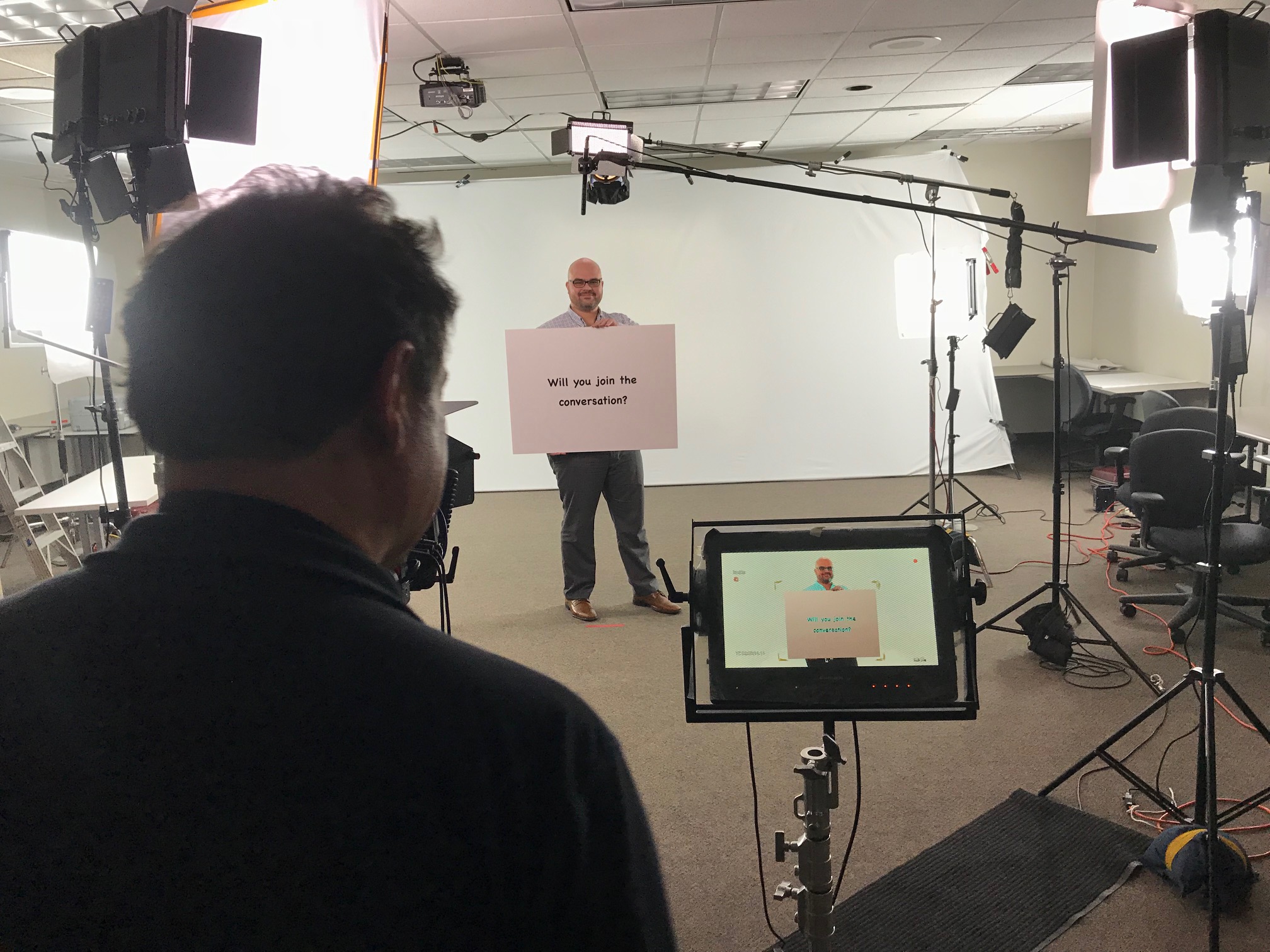
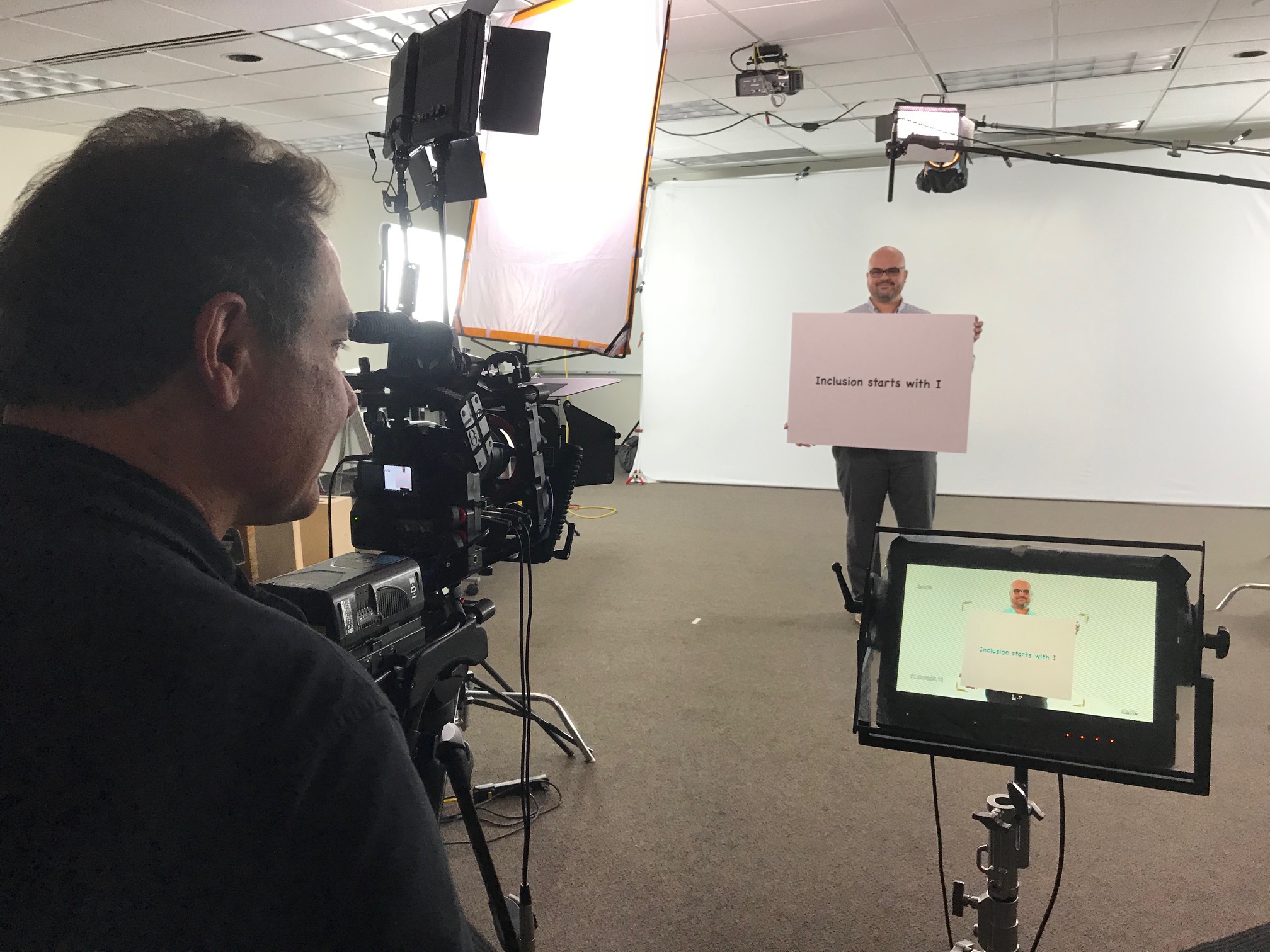
We are well-versed in all file types and styles of media and accompanying software. We use the latest in Artificial Intelligence for all our media services. Our private studio lighting and visual setup is perfect for small productions and interview scenes. Our studio is large enough to incorporate props to round out your set. We support every aspect of your production, from setting up a private, custom interview studio to supplying professional sound and camera operators, as well as providing the right equipment, ensuring your next video production is seamless and successful. We can fly our specialized drones indoors.
As a full-service video and photography production corporation, since 1982, St Louis Photography Studio has worked with many businesses, marketing firms, and creative agencies in the St. Louis area for their marketing photography and video. When your project calls for more than standard aerial coverage, our team is ready to provide advanced visual solutions backed by production experience, technical understanding, and a strong commitment to delivering useful, professional results.






























 St Louis Photography Studio