Reveal Hidden Roof Moisture with Our Thermal Drone Services
For facility leaders, property managers, operations directors, and marketing teams responsible for large commercial properties, a roof is easy to overlook until it becomes an urgent problem. By the time water intrusion shows itself inside a building, moisture has often been spreading beneath the membrane or insulation for some time. What appears to be a minor issue can quietly become a major capital expense, disrupting operations, damaging interiors, affecting occupant comfort, and creating avoidable repair costs.
That is why thermal drone services have become such a valuable tool for modern building assessment. Instead of waiting for visible evidence of failure, organizations can use thermal imaging, radiometric data, and high-resolution roof mapping to detect hidden moisture patterns early, document conditions clearly, and make better-informed decisions about repair, maintenance, and capital planning.
At St Louis Photography Studio, we see this work as far more than capturing images. We build data-driven systems that give facility leaders real visibility into the health of their buildings. Our focus is on using thermal imaging, radiometric data, and high-resolution mapping to create timestamped, defensible records of roof and asset conditions for schools, healthcare facilities, manufacturers, and commercial portfolios. When decision makers need credible visual evidence and actionable documentation, thermal drone imaging offers a powerful advantage.
Why Hidden Roof Moisture Is So Difficult to Diagnose
Roof systems can fail slowly and invisibly. Water may enter through flashing details, seams, penetrations, drainage problems, or age-related membrane deterioration. Once it gets into the roofing assembly, moisture often migrates laterally and saturates insulation before there is any obvious staining or leakage inside the building.
Traditional inspections still matter, but they have limits. Spot checks, manual walkthroughs, and visual observations may identify surface defects, yet they do not always reveal the full extent of subsurface moisture. Even experienced maintenance teams can miss the hidden spread of trapped water, especially on large or complex roof systems.
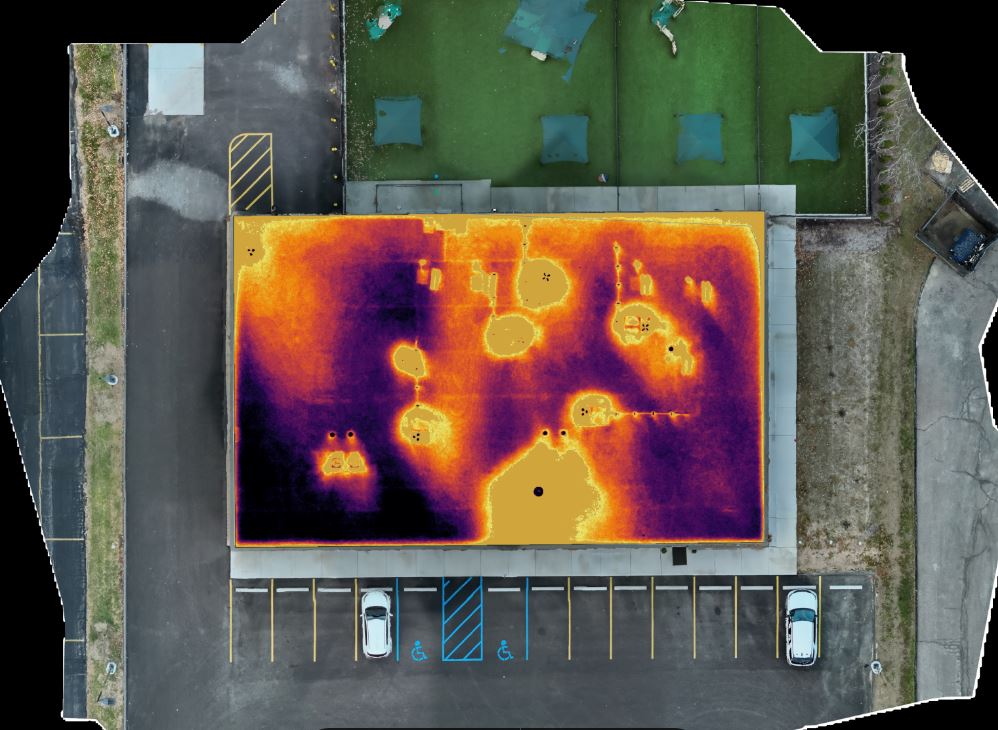
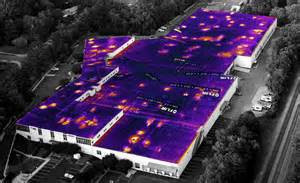
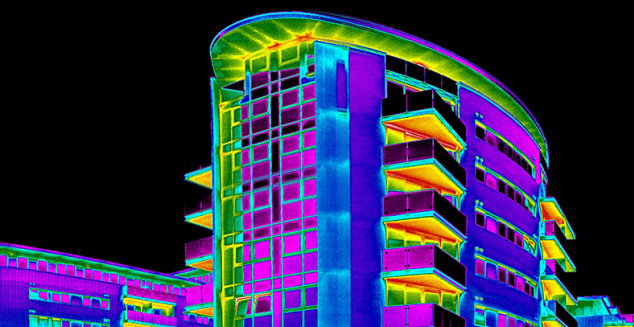
This is where thermal drone services change the conversation. By surveying broad roof areas efficiently and capturing temperature differentials that may indicate moisture intrusion, a thermal inspection can reveal patterns invisible to the naked eye. It gives stakeholders a better starting point for targeted testing, repair prioritization, and budget planning.
How Thermal Drone Roof Inspections Work
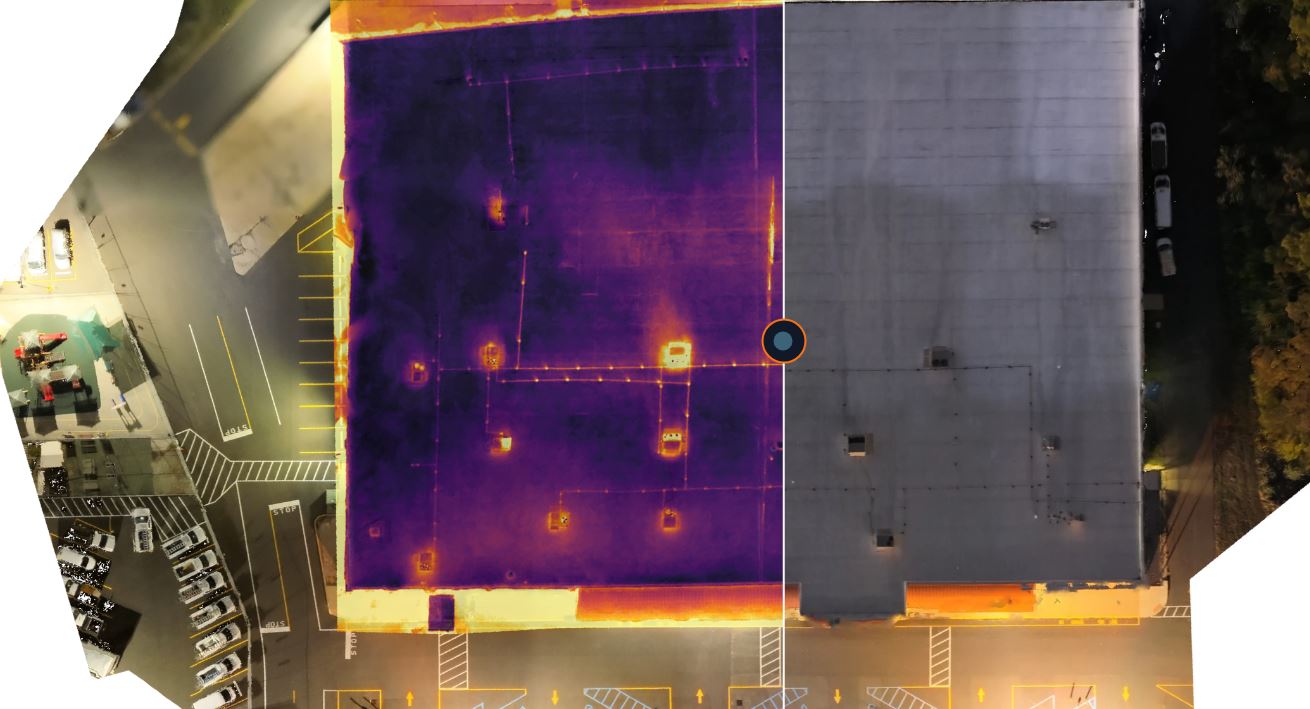
Thermal drone inspections rely on infrared sensors that detect surface temperature differences. Moisture-laden materials often heat and cool differently than dry materials. Under the right inspection conditions, these thermal differences can show up as anomalies that help identify areas of concern.
A professional workflow goes beyond simply flying a drone over a building and taking a few infrared pictures. Accurate thermal roof assessment depends on planning, timing, sensor quality, flight method, data capture discipline, and interpretation experience.
A typical thermal drone workflow may include:
- site and roof evaluation
- safe flight planning around the facility and surrounding structures
- thermal image capture under appropriate environmental conditions
- high-resolution visual image capture for context
- radiometric data collection
- orthomosaic or mapped roof deliverables
- annotated reporting that ties thermal anomalies to physical roof locations
- timestamped documentation for maintenance files, capital planning, or insurance support
The result is not just imagery. It is a documented record of conditions that can support more confident decision-making.
The Value of Radiometric Data
Not all thermal imagery is equal. One of the most important distinctions in professional thermal services is whether the data is radiometric. Radiometric thermal files retain temperature data for each pixel in the image, allowing deeper analysis after capture.
This matters because facility decisions should not rely on vague heat signatures alone. When inspections include radiometric data, analysts can evaluate thermal patterns with greater precision, compare areas of concern more carefully, and produce more defensible findings. That is especially useful when properties are large, when multiple stakeholders are involved, or when documentation may be reviewed months later.
For organizations managing multiple buildings, radiometric data also contributes to consistency. It supports a more systematic inspection process and helps establish a stronger record over time.
Why Timestamped, Defensible Records Matter
Facility management is increasingly data-driven. Whether an organization is planning maintenance, preparing for budget review, managing vendors, responding to board oversight, or documenting asset conditions for compliance and insurance purposes, good records matter.
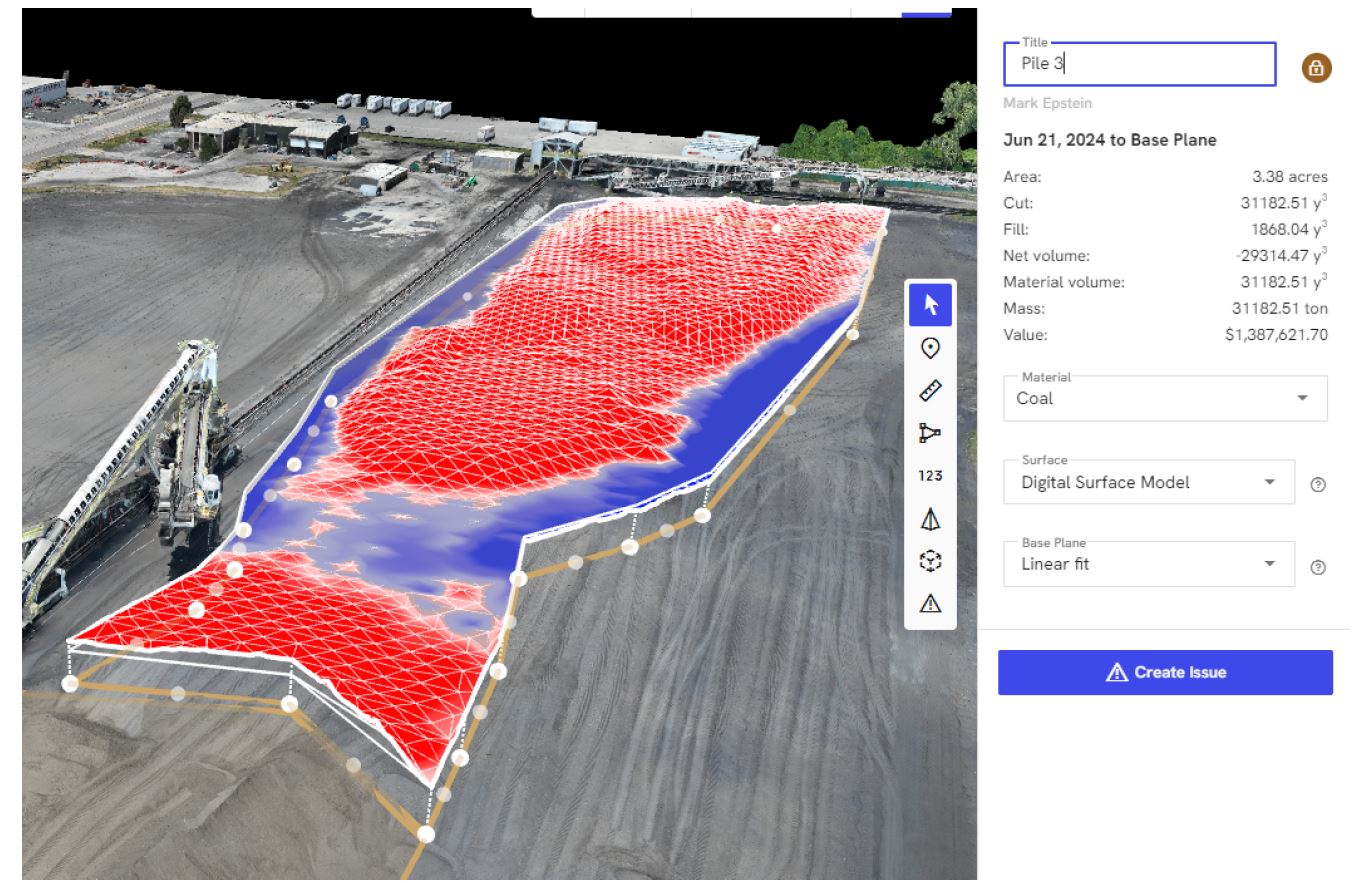

A timestamped thermal inspection creates a clear snapshot of roof conditions at a specific moment. That documentation can be invaluable when:
- comparing current conditions to future inspections
- supporting repair recommendations
- tracking changes in problem areas over time
- justifying maintenance expenditures
- documenting due diligence
- improving communication between facilities teams, leadership, consultants, and contractors
Defensible records are especially important for organizations with complex approval processes. A visual, mapped, and timestamped inspection helps move conversations away from assumptions and toward evidence.
Why Schools, Healthcare Facilities, Manufacturers, and Commercial Portfolios Benefit
Different property types face different operational risks, but all benefit from better roof intelligence.
Schools and Campuses
Educational facilities often have aging buildings, limited maintenance windows, and tight budget cycles. Roof failures can interrupt classes, damage equipment, and create costly emergency responses. Thermal drone services help school administrators and facilities teams identify areas of concern before they escalate, allowing more strategic maintenance planning during breaks or scheduled project windows.
Healthcare Facilities
Healthcare environments have very little tolerance for disruption. Roof leaks over clinical, administrative, or sensitive support areas can affect operations and patient experience. Thermal inspections offer a non-invasive way to assess broad roof areas while supporting proactive maintenance decisions in facilities where reliability matters.
Manufacturing and Industrial Sites
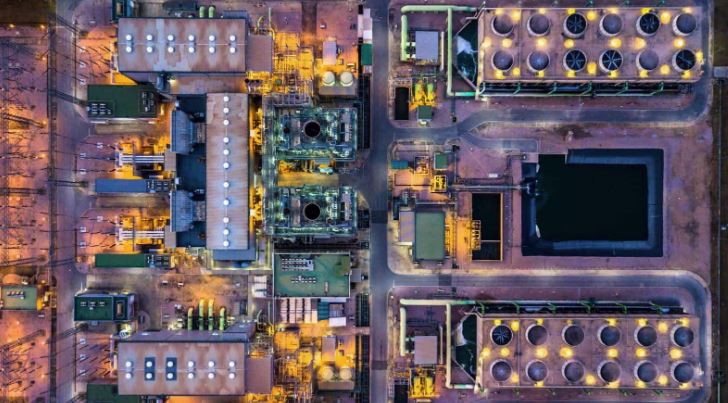
Manufacturers depend on uninterrupted operations. Water intrusion can threaten production zones, storage areas, electrical systems, and interior assets. Thermal drone imaging can help maintenance and plant leaders identify developing roof issues before they impact productivity or lead to larger structural and equipment concerns.
Commercial Real Estate Portfolios
For owners and managers of multi-site properties, consistency is essential. Thermal drone inspections can help standardize roof condition documentation across multiple assets, making it easier to prioritize repairs, compare building needs, support capital planning, and communicate with investors or internal leadership teams.
More Than Inspection: A Strategic Asset Management Tool
Thermal roof inspections should not be viewed only as a reactive troubleshooting service. They are increasingly part of a broader asset management strategy.
When organizations establish a routine inspection cadence, they gain better long-term visibility into roof performance. Instead of relying solely on crisis response or scattered service calls, they can develop a building record that supports lifecycle planning. That shifts the conversation from emergency expense to informed stewardship.
This matters to decision makers because better visibility often leads to:
- more targeted repairs
- fewer unnecessary tear-offs
- clearer capital forecasting
- improved vendor accountability
- stronger maintenance documentation
- reduced operational surprises
A roof is one of the most important protective systems on any facility. Managing it with better data is simply good business.
The Role of High-Resolution Mapping
Thermal data becomes even more useful when paired with high-resolution visual mapping. Context matters. It is not enough to know that a thermal anomaly exists. Decision makers need to know exactly where it is, how large the area appears to be, how it relates to penetrations or drainage features, and how to communicate that location to internal teams or roofing contractors.
That is why high-resolution mapping and roof mosaics are such an important part of a professional deliverable set. They turn raw image capture into practical information. Facilities teams can mark up reports, compare roof sections, reference exact locations, and coordinate repairs more efficiently.
For marketing and communications professionals working in facilities-related industries, this type of visual clarity also has value. It helps organizations communicate competence, diligence, and modernization to stakeholders, boards, donors, or clients.
Why Professional Interpretation Matters
Thermal imaging is powerful, but it must be handled carefully. Temperature anomalies do not automatically equal moisture. Surface materials, weather conditions, reflected heat, rooftop equipment, shading, and other variables can influence readings. That is why trained capture methods and disciplined interpretation are critical.
Professional thermal drone services are not just about owning equipment. They require understanding building surfaces, environmental timing, image context, and the relationship between thermal signatures and likely roof conditions. The best results come from combining strong imaging practices with practical production discipline and reporting clarity.
For organizations that need reliable documentation rather than guesswork, that difference matters.
Integrating Thermal Data into Broader Facility Communication
One overlooked advantage of thermal drone inspections is how effectively they support internal communication. Facilities personnel may understand the urgency of a roofing issue, but leadership teams, boards, insurance contacts, or outside stakeholders often need clear visual evidence to appreciate the scope and timing of action required.
Thermal imagery and mapped reports help bridge that communication gap. A decision maker can see where the issue is, how it relates to the building, and why it deserves attention. That improves alignment across departments and reduces ambiguity when discussing repairs, proposals, or funding priorities.
In that sense, visual documentation is not just technical. It is operationally persuasive.
What to Look for in a Thermal Drone Partner
When selecting a provider for thermal roof imaging, organizations should look beyond simple drone ownership. The right partner should understand both image acquisition and the real-world communication needs of facility decision makers.
Important considerations include:
- experience working with commercial properties
- professional thermal imaging workflow
- radiometric capture capability
- high-resolution visual documentation
- mapped and annotated deliverables
- clear reporting structure
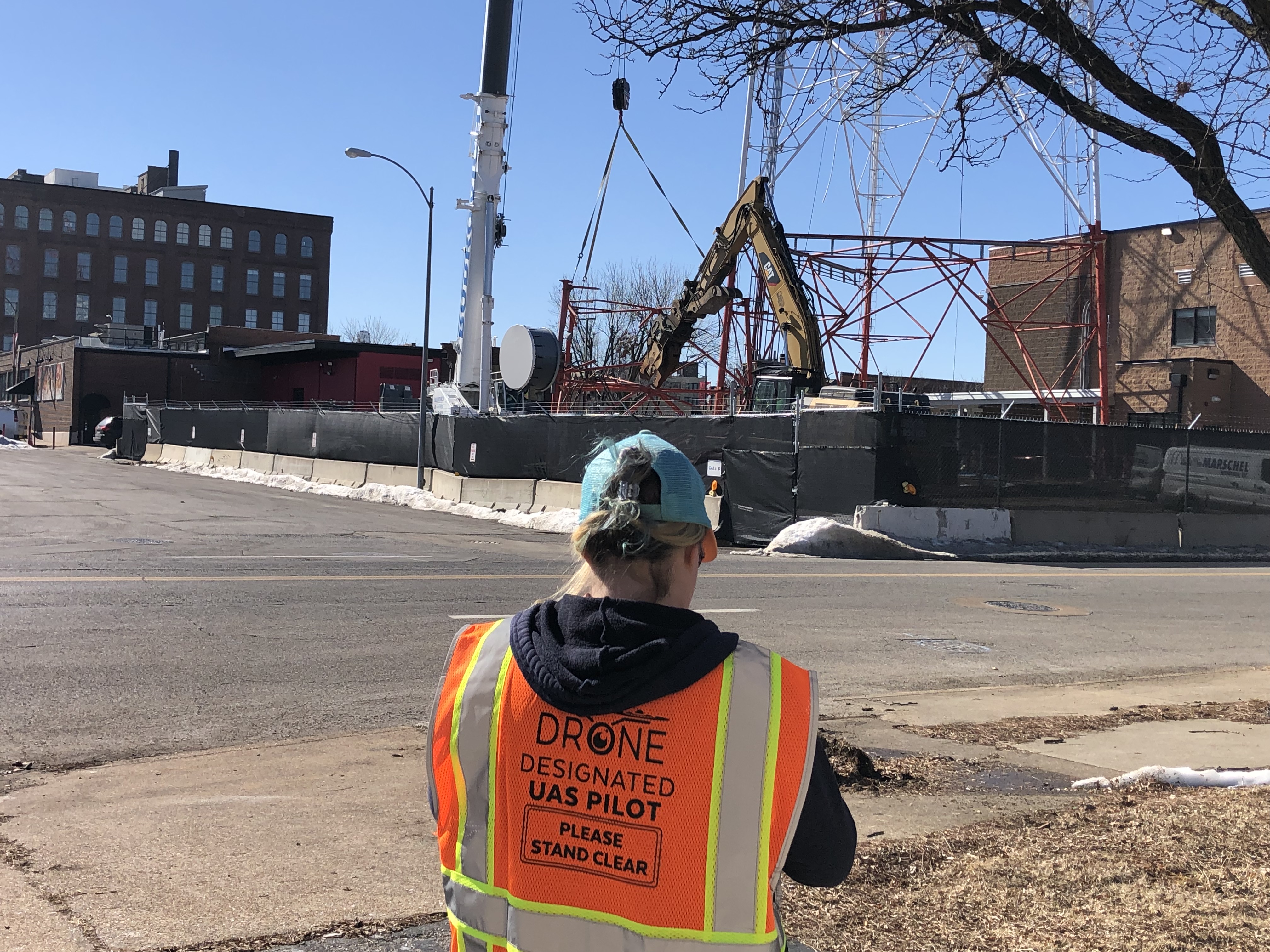
- safe, legal drone operations
- ability to support repeat inspections and long-term recordkeeping
A strong provider helps transform captured data into useful information. That is the real value.
A Smarter Way to See the Health of Your Building
Facility management increasingly depends on visibility, documentation, and defensible information. Hidden roof moisture is one of the most costly examples of a problem that can remain unseen until it becomes disruptive. Thermal drone services offer a smarter path forward by identifying likely problem areas earlier, documenting them more clearly, and supporting better decisions across maintenance, operations, and capital planning.
For schools, healthcare systems, manufacturers, and commercial property owners, this is not just about technology. It is about reducing uncertainty. It is about gaining a clearer understanding of building conditions before problems grow. It is about replacing assumptions with mapped, timestamped visual evidence.
That is exactly why thermal drone inspections have become such a valuable part of modern facility management.
Experienced Thermal Imaging and Production Support from St Louis Photography Studio
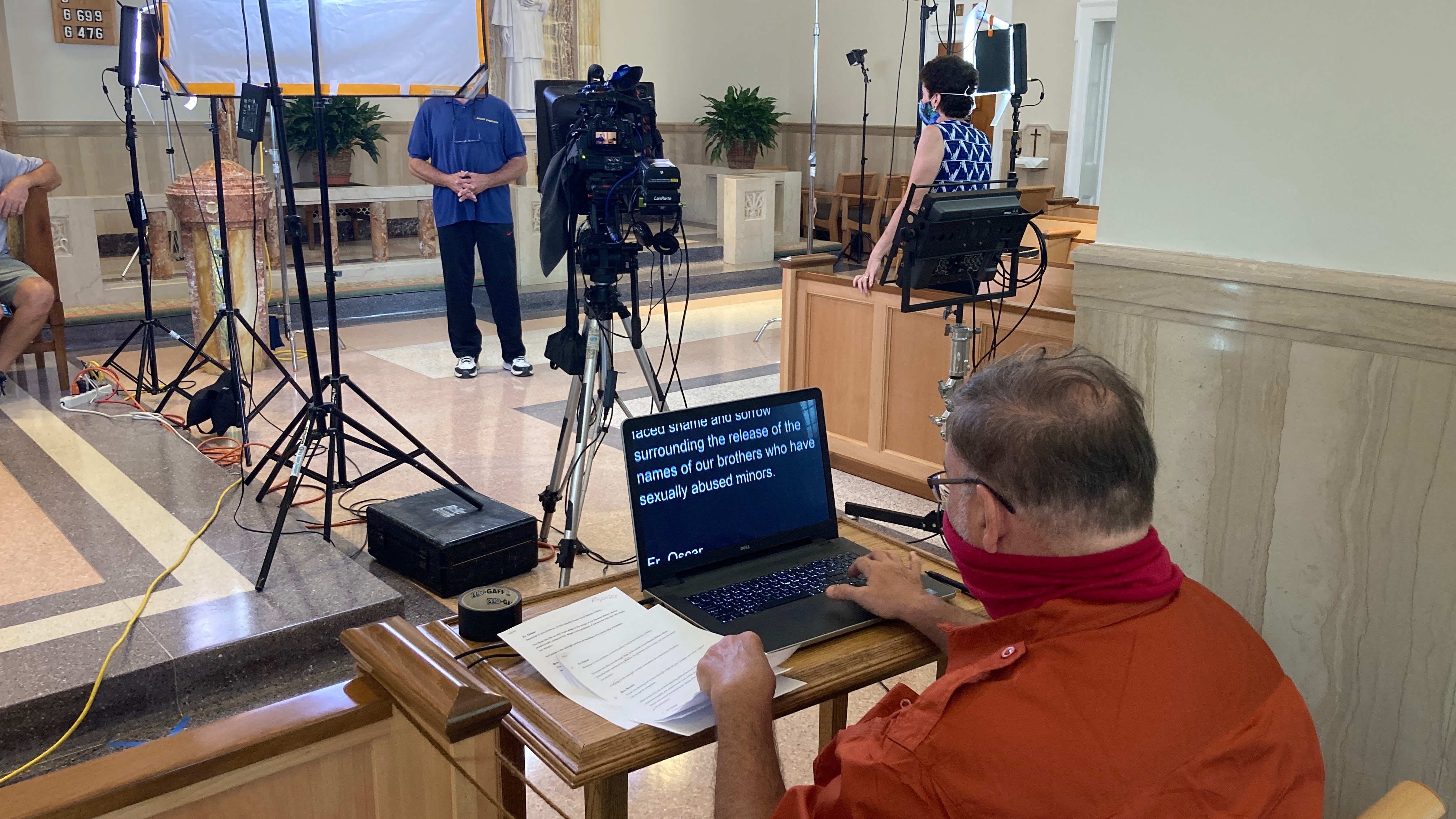
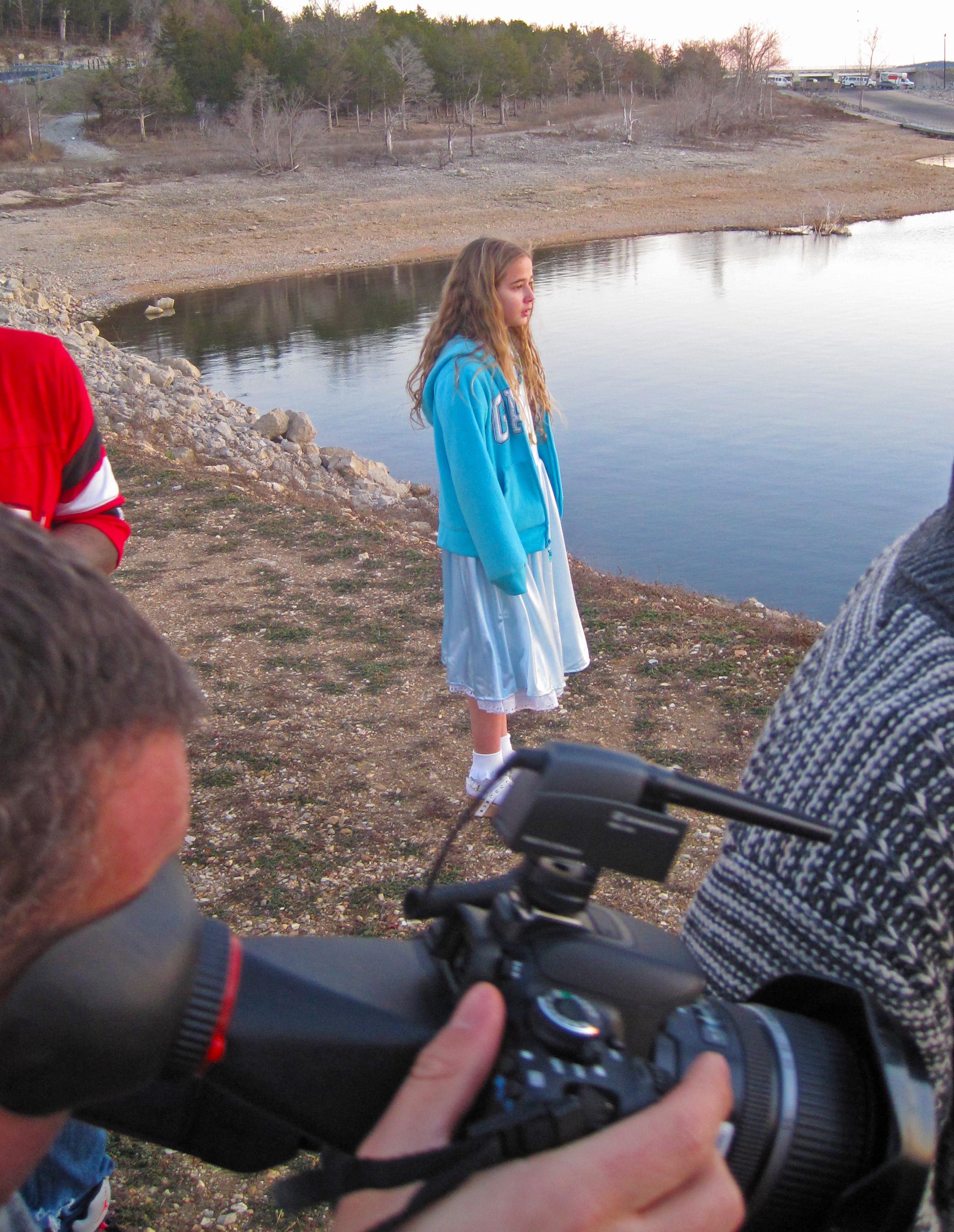
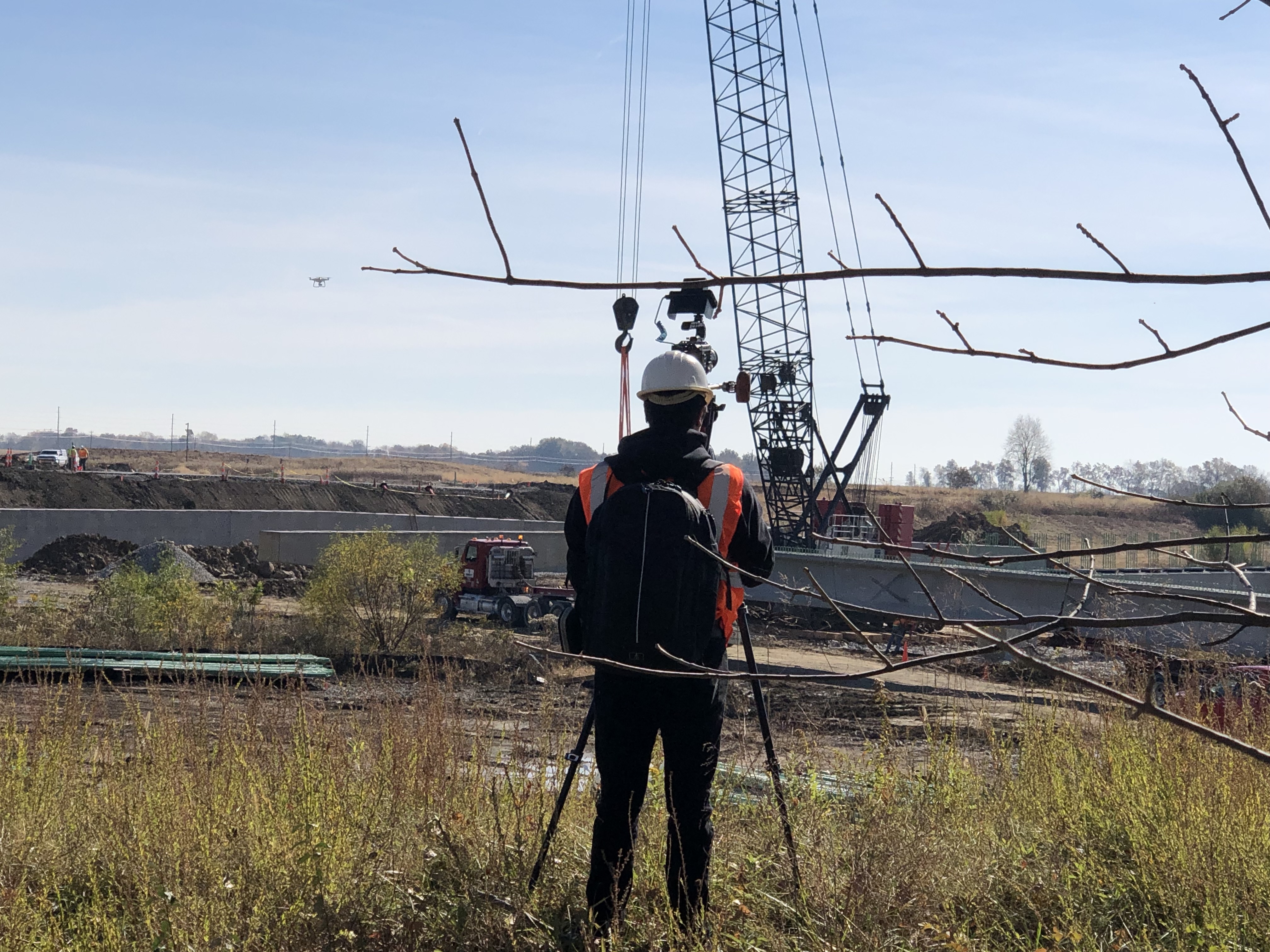
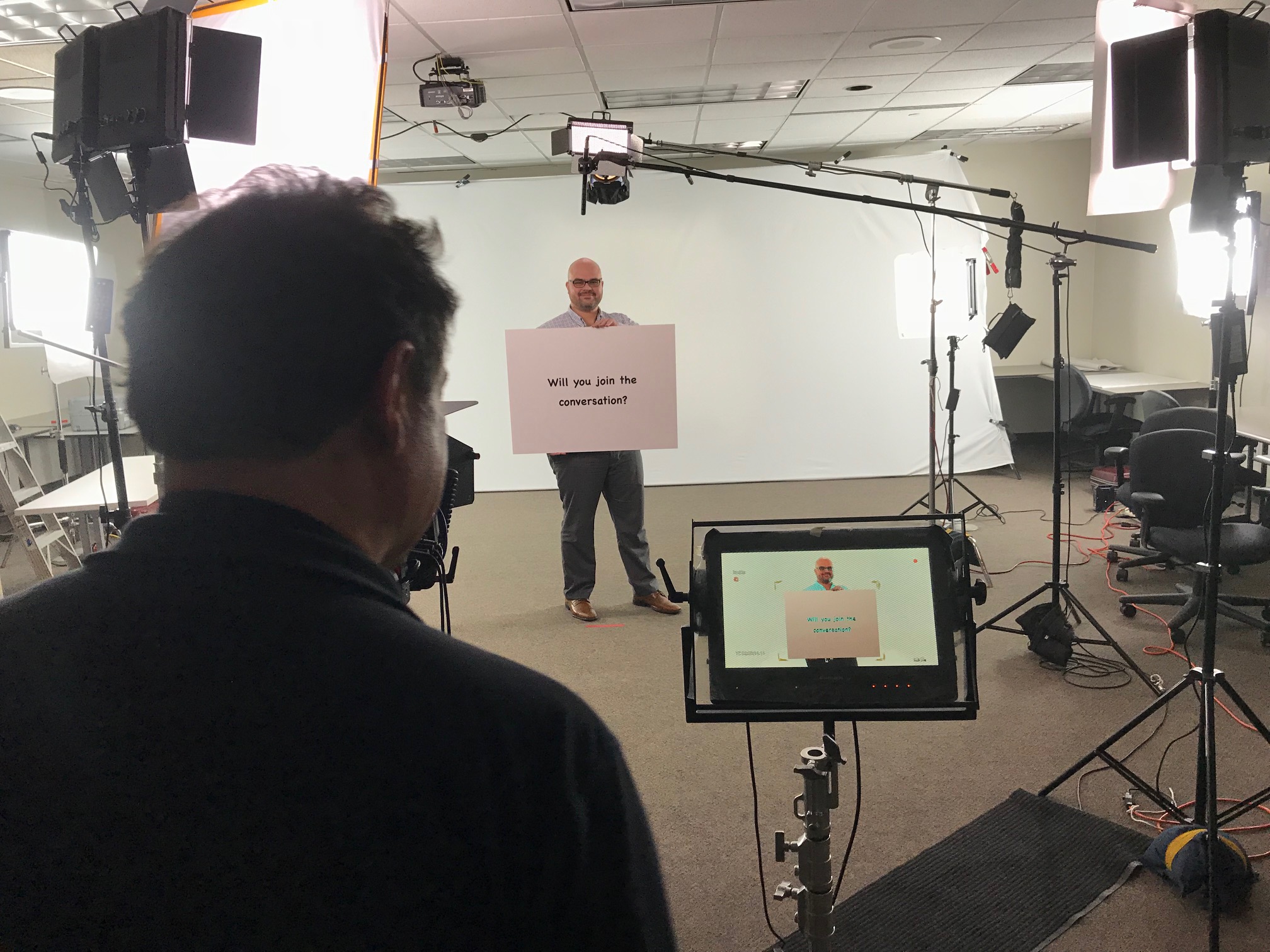
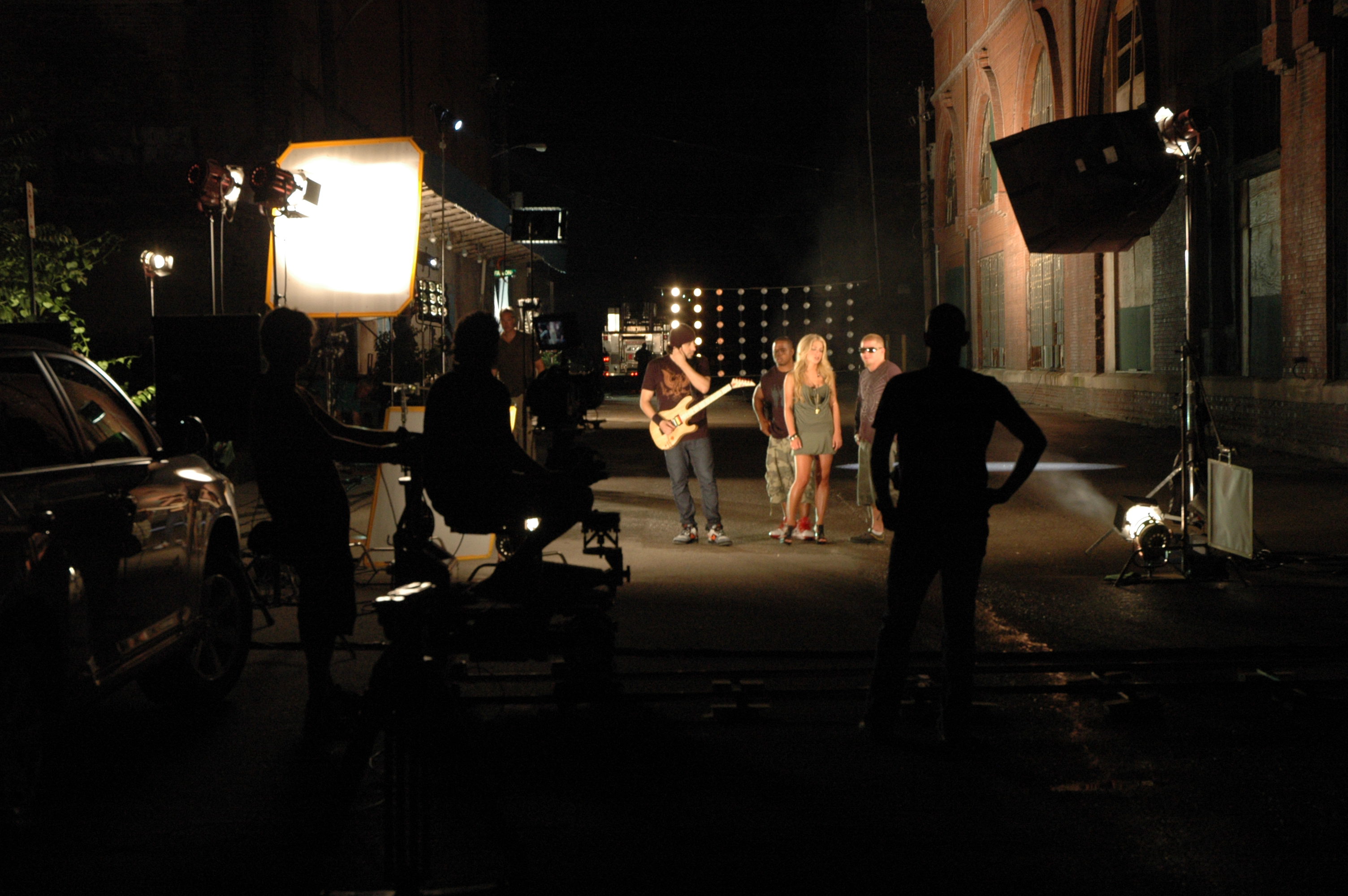
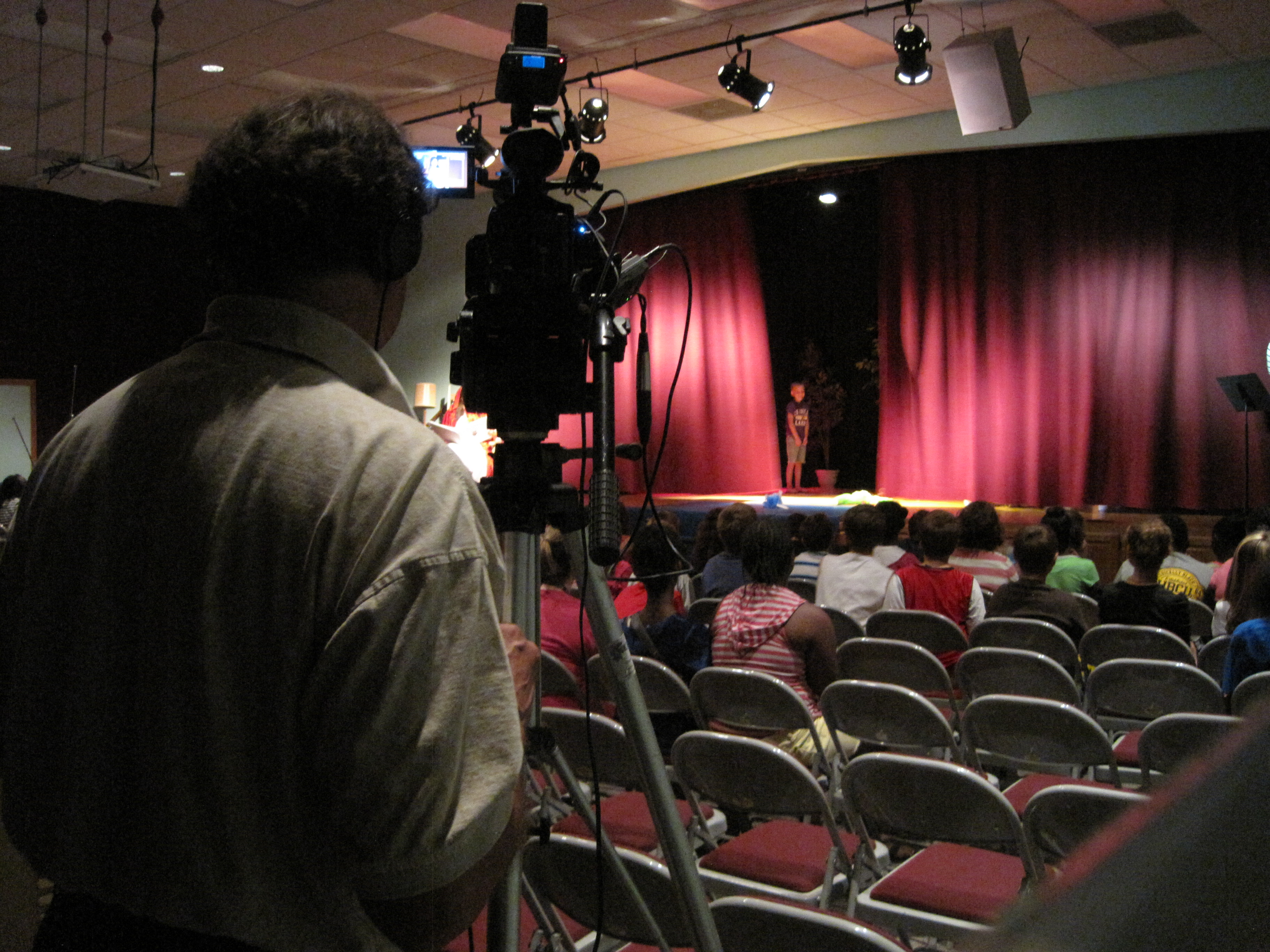
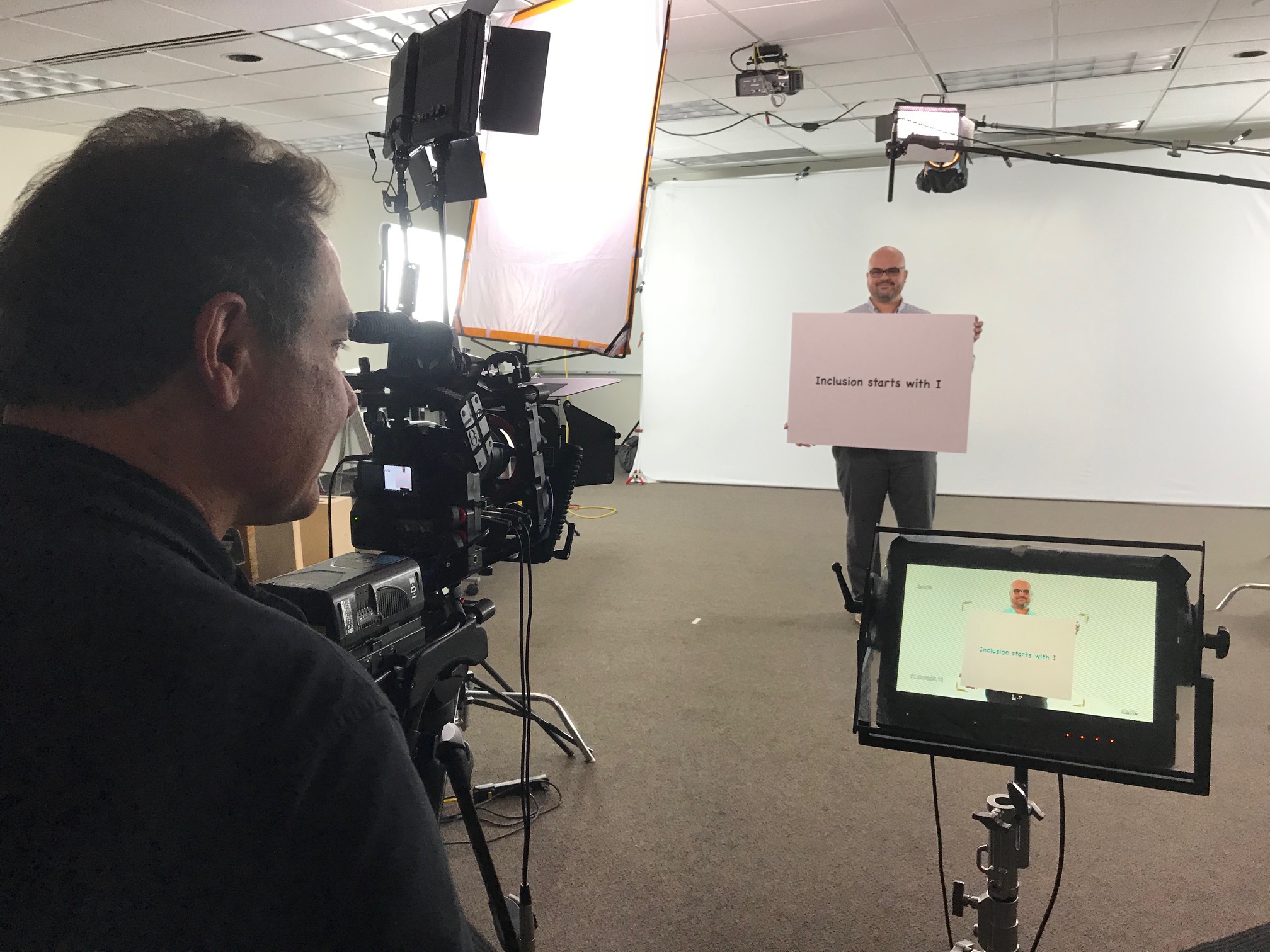
At St Louis Photography Studio, we bring decades of real-world production experience to every assignment. Since 1982, we have worked with many businesses, marketing firms, and creative agencies throughout the St. Louis area for their marketing photography and video needs. We are a full-service professional commercial photography and video production company with the right equipment and creative crew service experience for successful image acquisition. We offer full-service studio and location video and photography, as well as editing, post-production, and licensed drone services. St Louis Photography Studio can customize your productions for diverse types of media requirements. Repurposing your photography and video branding to gain more traction is another specialty. We are well-versed in all file types, styles of media, and accompanying software. We use the latest in Artificial Intelligence for all our media services. Our private studio lighting and visual setup is perfect for small productions and interview scenes, and our studio is large enough to incorporate props to round out your set. We support every aspect of your production, from setting up a private, custom interview studio to supplying professional sound and camera operators, as well as providing the right equipment, ensuring your next video production is seamless and successful. We can fly our specialized drones indoors. Whether your goal is thermal roof assessment, branded visual communication, or a broader content strategy built around photography and video, St Louis Photography Studio delivers experienced, data-informed production support designed to help organizations see more clearly and communicate more effectively.






























 St Louis Photography Studio